Natural Resources Research & Management
Natural Resources Research & Management
Carlie Blackburn, a graduate student completing a Master of Science degree in Auburn University’s Department of Civil and Environmental Engineering, began her undergraduate studies with the hopes of working with sea turtles. But after taking classes focused on wetland restoration and water quality, the image she had of her future quickly changed.
“I went to college wanting to work with sea turtles,” Blackburn said. “But after taking both of those classes, I realized I was much more interested in wetlands.” That interest eventually led her to The Jones Center at Ichauway.
She began working in the Center’s Ecohydrology Lab under the direction of Ecohydrologist Dr. Steven Brantley. It was there that she discovered a field of science she didn’t realize existed.
“I didn’t really know ecohydrology was a thing until I got to The Jones Center,” she said. “Then I was like, ‘Oh wait, this is actually exactly what I want to do.’”
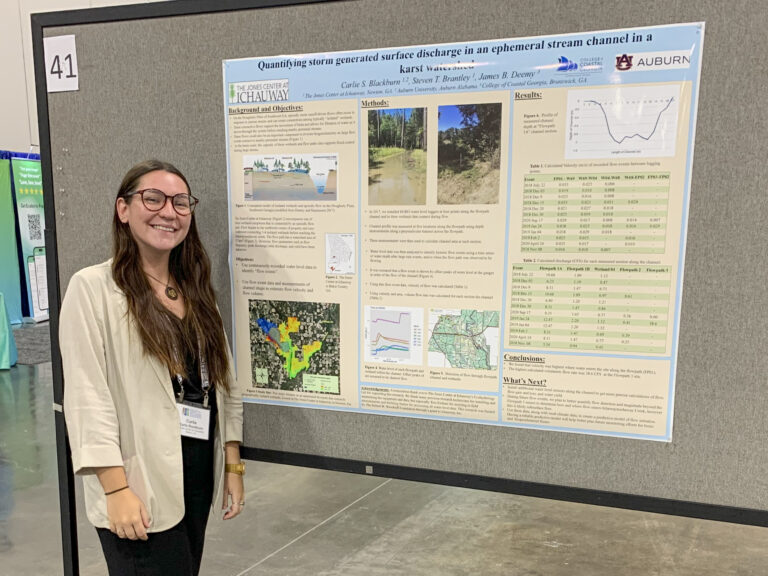
After spending a year and a half working in the Ecohydrology Lab, Blackburn fell in love with the geographically isolated wetlands that dot Ichauway’s landscape. She is now completing her master’s degree under the co-advisement of Dr. Steven Brantley (The Jones Center at Ichauway) and Dr. Frances O’Donnell (Auburn University) and is expected to graduate in May 2027.
Blackburn’s research focuses on quantifying net primary productivity, evapotranspiration, and water use efficiency of geographically isolated wetlands in southwestern Georgia. Together, these measurements help scientists better understand the role wetlands play in the water and carbon cycles.
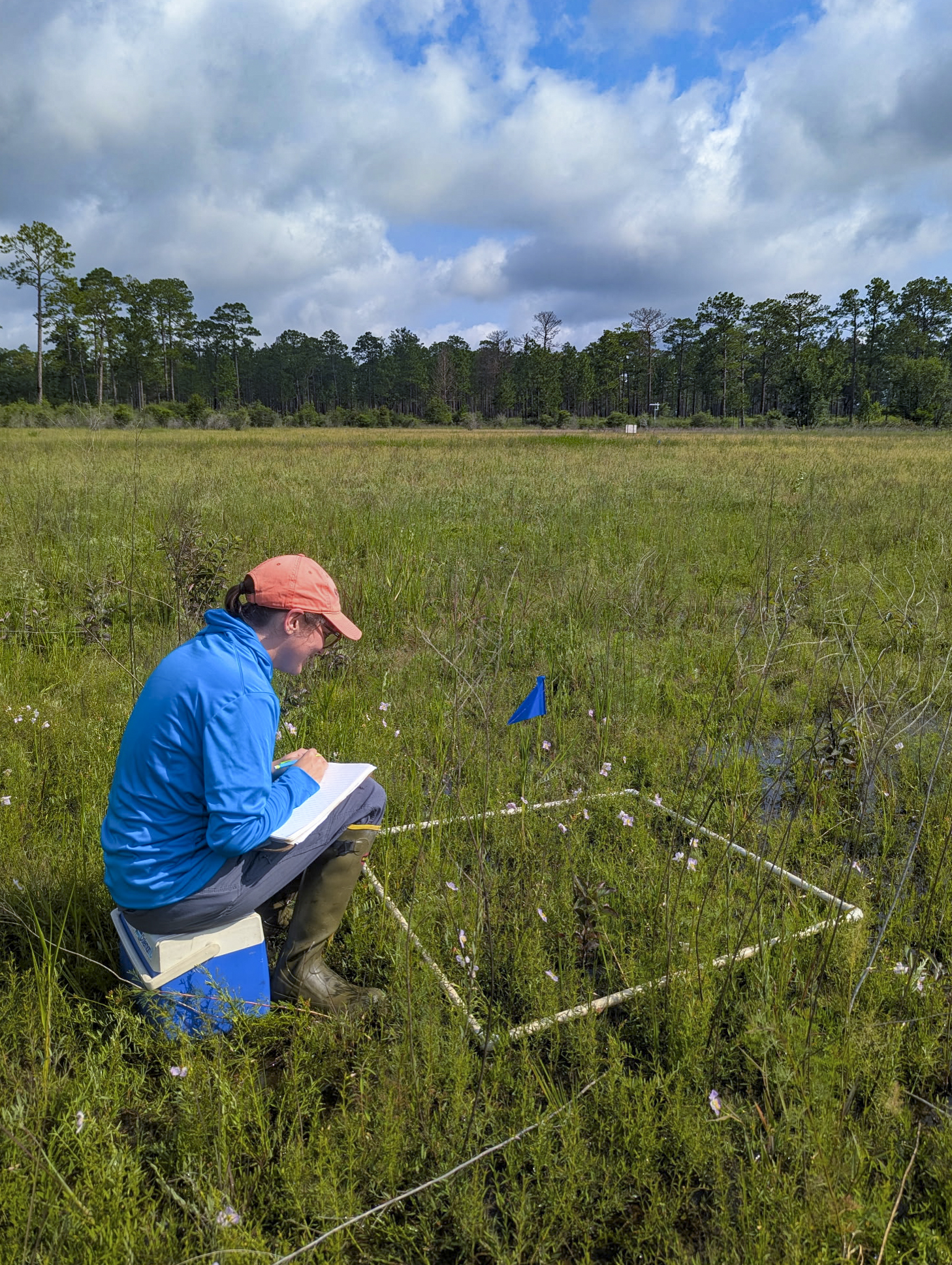
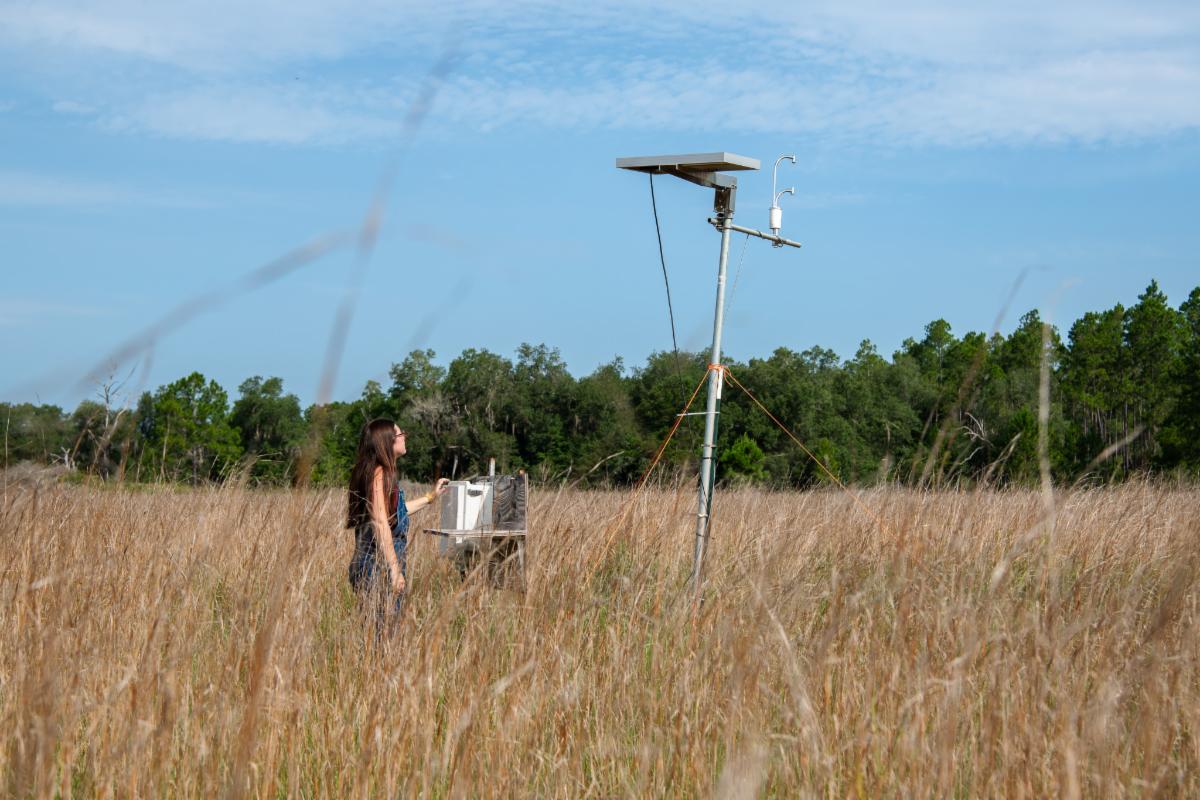
A typical day for Blackburn includes collecting data at one of her designated wetland sites. Some days, you can find her connecting a computer to a specialized instrument that measures evapotranspiration. On other mornings, you may find her carefully measuring photosynthesis and water use efficiency from the leaves of dominant plant species.
“Usually, to collect evapotranspiration data, you have to use a specific equation with a lot of inputs,” Blackburn said. “It takes a really long time to calculate, so the sensor just directly gives that to me.”
Through her fieldwork, Blackburn has developed a love for the wetlands she studies.
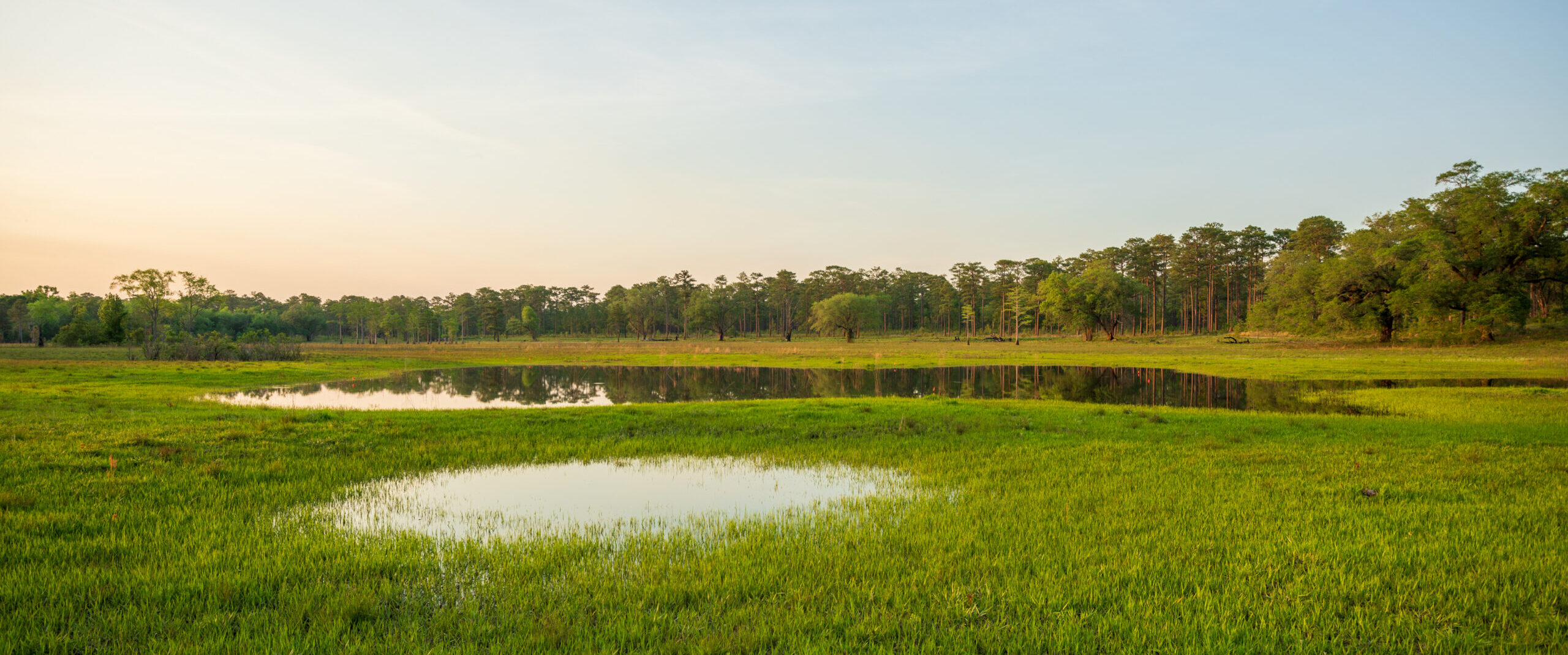
“Balden Pond has a special place in my heart because I’ve done a year of data collection there,” she said. “Rhexia [Pond] has so much biodiversity and a lot of really cool plants that aren’t in Balden, so I love both wetlands for different reasons.”
Although Blackburn is still collecting data, her research has already produced some surprising findings. Researchers expected evapotranspiration to be higher in wetlands than in nearby uplands because of greater soil moisture. Instead, they found the opposite to be true at Balden Pond.
Her work has also revealed just how much carbon these wetlands can store. Using measurements of plant productivity, Blackburn estimates that approximately 8,000 grams of carbon are stored in the vegetation of Balden Pond per square meter. Across the wetland’s 23.69 acres, that is roughly equivalent to the weight of two gopher tortoises or 50 bobwhite quail. Altogether, that amounts to nearly five million bobwhite quail-worth of carbon stored in vegetation.
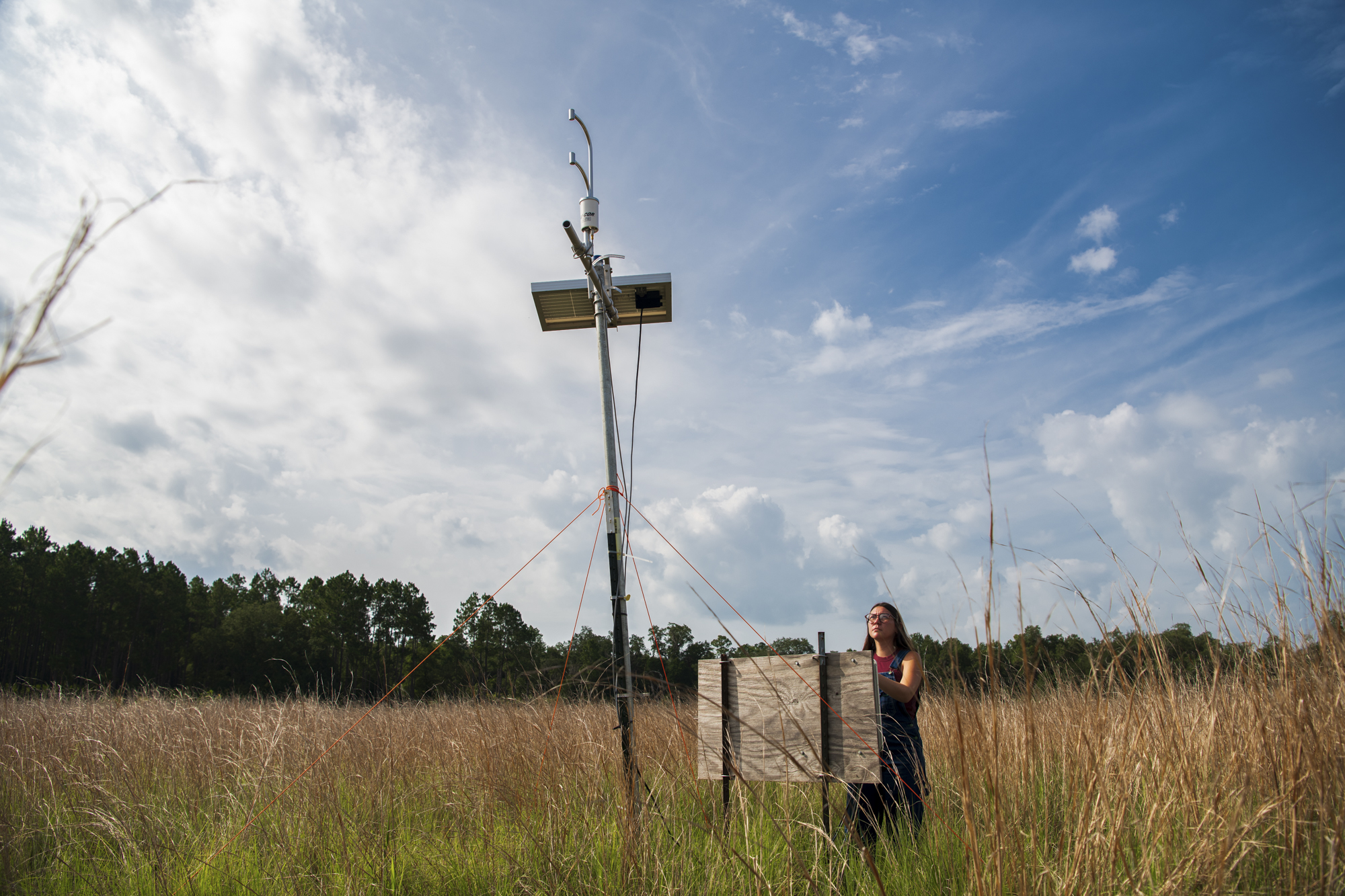
Although geographically isolated wetlands often go unnoticed, Blackburn hopes her research will help demonstrate just how valuable they are. In addition to storing carbon, these wetlands improve water quality, provide critical wildlife habitat, and support biodiversity throughout the longleaf pine ecosystem.
“It’s really cool to see that it is a significant amount,” Blackburn said. “That’s actually something that might be a meaningful measurement.”
As Blackburn continues her research, she hopes her findings will contribute to a better understanding of the important role geographically isolated wetlands play throughout the Southeastern Coastal Plain and help direct future conservation and restoration efforts.
Carlie Blackburn is a Master’s student at Auburn University and The Jones Center at Ichauway co-advised by Dr. Frances O’Donnell and Dr. Steven Brantley. Read more about the work of the Auburn Ecohydrology Lab and the Jones Center Ecohydrology Lab. Blackburn’s work is part of a larger research effort by The Jones Center at Ichauway and partners studying many of the 10,000+ wetlands of the Dougherty Plain of southwest Georgia – a geologically unique and wetland-rich landscape.