Natural Resources Research & Management
Natural Resources Research & Management
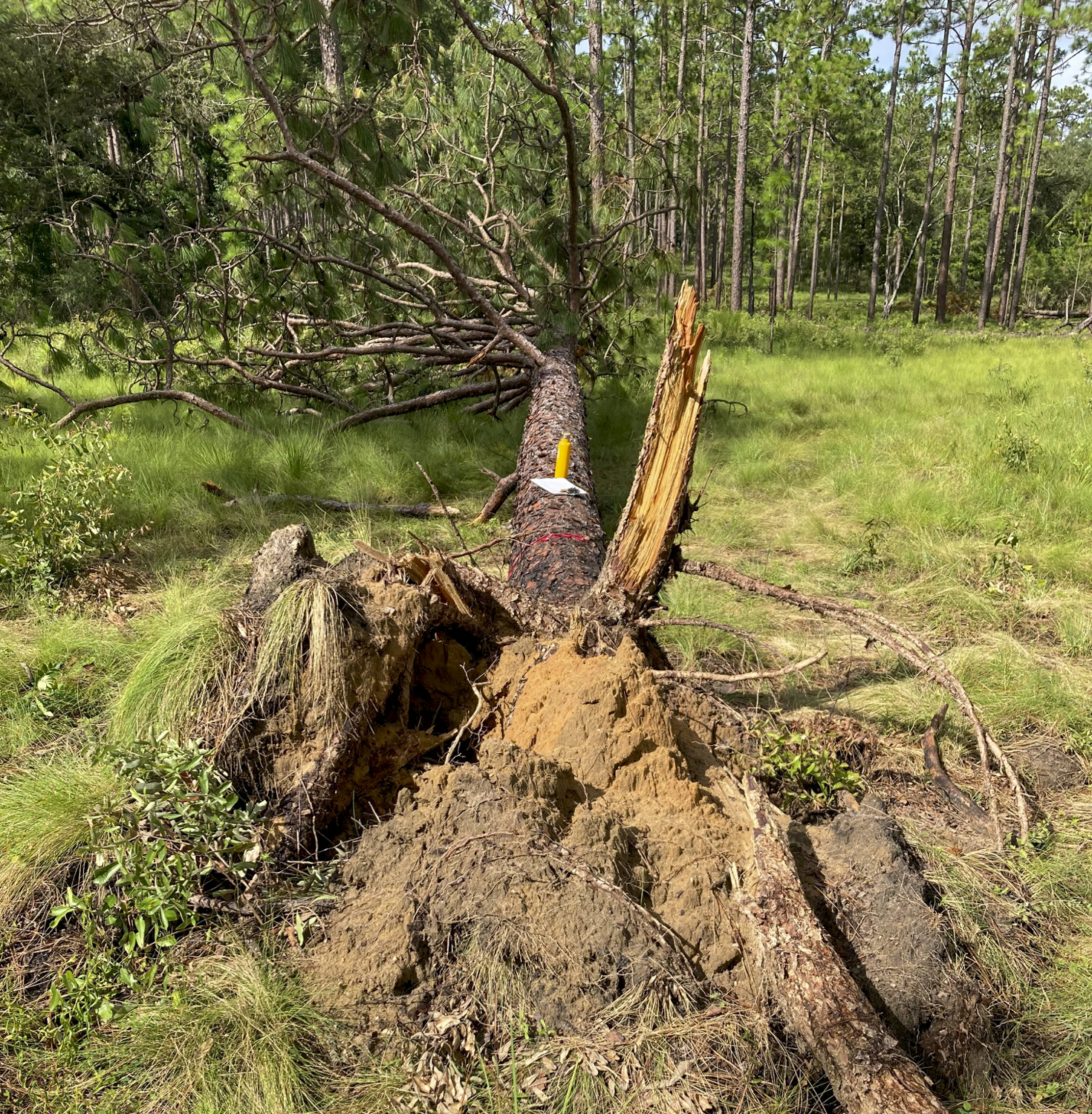
A 300-year-old longleaf pine will experience dozens of hurricanes and tropical storms (hereafter referred to as tropical cyclones) over its lifespan. The combination of frequent fire and chronic tropical wind disturbance has shaped the longleaf pine ecosystem for millennia, making it well-adapted to withstand and recover from disturbance. While it’s human habit to quickly forget about tropical cyclones after they pass, the longleaf pine forest “keeps the score.”
Longleaf pine exhibits several wind-resistant traits, including reduced tree height, increased structural strength of latewood (the part of a tree growth ring that matures later in the growing season), high wood density, a low center of gravity, and a deeply anchored tap root. A recent synthesis from our Landscape Ecology Lab highlighted years of field studies confirming that longleaf pine are built to withstand intense tropical cyclones (Zampieri et al., 2025). Despite this, the scale of wind exposure can be extensive. Hurricane Michael alone affected more than 25% of the remaining longleaf pine savannas and woodlands, highlighting the ecosystem’s vulnerability to a single, intense storm event (Zampieri et al., 2020).
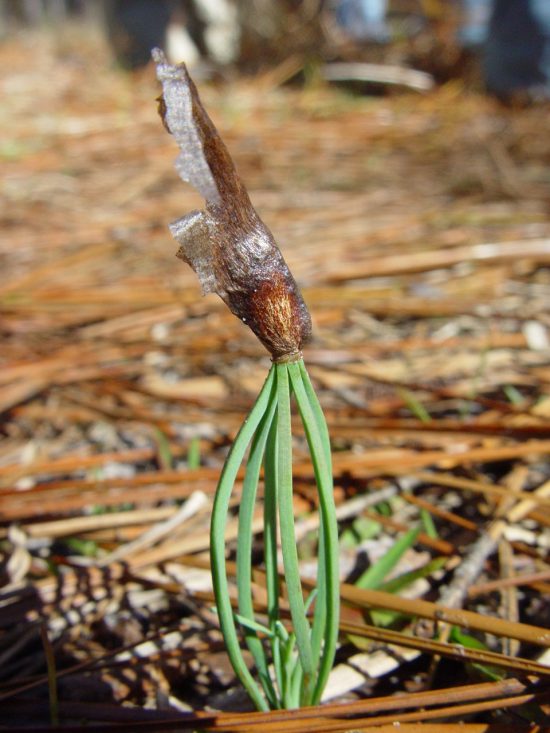
These examples demonstrate longleaf pine’s wind resistance when tropical cyclones make landfall. However, resilience – defined as the rate at which an ecosystem returns to pre-disturbance conditions – focuses on recovery. Recovery from severe wind damage is driven by recruitment, which refers to the successful establishment of new longleaf pine seedlings. The longleaf pine ecosystem naturally regenerates through a process called gap-phase regeneration (Brockway et al., 1998). Our researchers have found that increased sunlight from canopy gaps can accelerate height growth in longleaf pine saplings giving them an advantage over other competing species. This contributes to longleaf pine resilience and suggests that recurring tropical wind disturbance can favor longleaf pine dominance on the landscape. (Pope et al., 2023).
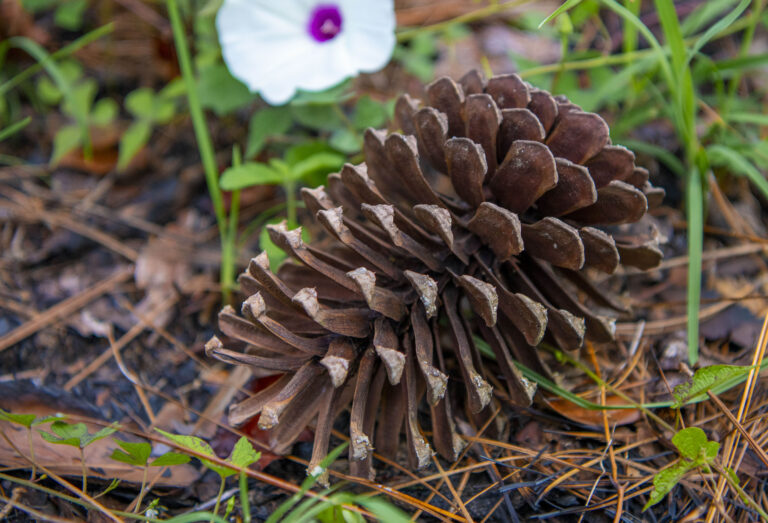
Surviving major tropical cyclones is just one part of a longleaf pine’s life history. Our researchers have found that the reproduction of surviving trees is affected in the two years following an intense tropical storm event. In 2023, a Jones Center study discovered that longleaf pinecone production increased by 31% one year after a tropical cyclone event and increased by 71% two years after a tropical cyclone event (Cannon et al., 2023b). By the third year post-storm, cone production returned to normal levels. Before this study, there was no known documentation or evidence supporting this increased reproductive output following tropical cyclone events (Cannon et al., 2023b).
Longleaf pine exhibits a reproductive phenomenon known as masting, which occurs in species where seed production is highly variable from year to year. This means longleaf pine may produce an overwhelming number of cones in one year, but very minimal cones in the subsequent year. Estimates of these reproductive cycles between high-yield cone crops vary across historical literature, spanning intervals of 3 to 4 years (Guo et al., 2016), 5 to 7 years (Wahlenberg, 1946), and 8 to 10 years (Maki, 1952; as synthesized by Cannon et al., 2023b). This groundbreaking work has transformed years of land manager lore into established science.
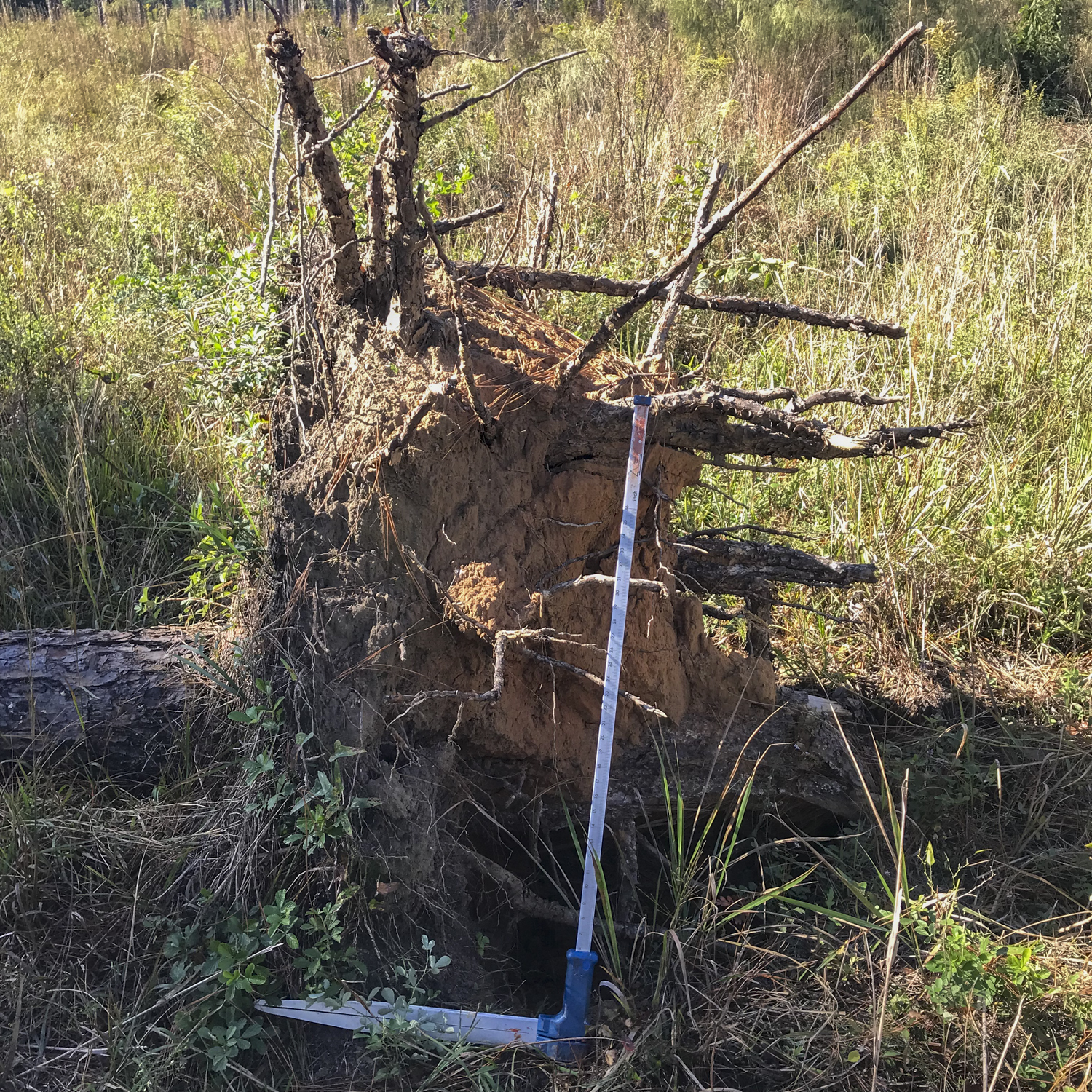
Tropical cyclones and fire work together, creating a bimodal disturbance regime that stimulates seed production and, subsequently, regeneration following a tropical cyclone event. Longleaf pine seeds need contact with bare mineral soil for germination, which is typically exposed after surface fires. However, when extreme winds uproot mature trees, large areas of soil are exposed (Cannon et al., 2023b). This bare soil from uprooted trees works in tandem with fire-burned ground to provide germination sites for the increased cone and seed production associated with tropical cyclones.
When a tropical cyclone makes landfall, it can cause longleaf pine trees to fall, uprooting their major taproot and creating pit-and-mound depressions on the forest floor. These structures provide vital habitat for wildlife by offering shelter, shade, and food sources, boosting biodiversity for a variety of native mammals, birds, reptiles, and amphibians.
While few studies have examined how wildlife use these structures, especially during the immediate days following a storm, our Landscape Ecology and Herpetology Labs investigated how vertebrates interact with newly uprooted longleaf pine trees. By tracking these areas over time, our researchers documented 48 vertebrate species and observed how their activity patterns varied with the age of fallen trees and specific tree characteristics. Overall, birds and reptiles accounted for the greatest number of detections (Howze et al. 2025).
Our Landscape Ecology Lab created a tropical cyclone regime map of North America by analyzing a coastal to inland gradient of tropical cyclone wind probabilities. These are clustered into four geographically distinct tropical cyclone wind regimes: continental, inland, coastal, and fringe, determined by how often they experience tropical cyclone events and subsequent strong winds. For example, the coastal fringe regime experiences Category 1 winds (74-95 mph) relatively frequently, whereas the deeper inland regime experiences Category 1 winds very infrequently (Cannon et al., 2023a).
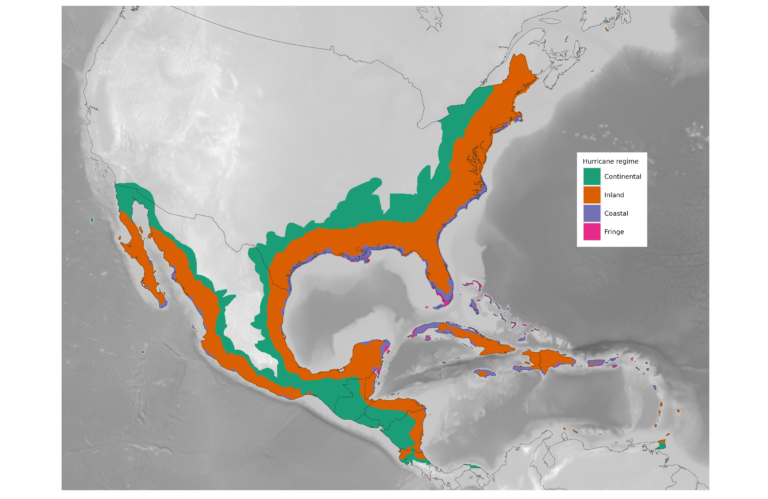
As climate change alters global weather patterns, understanding shifting tropical cyclone wind probabilities becomes critical for long-term conservation planning. Recent studies suggest that future changes in tropical cyclone tracks and landfall patterns may shift hurricane exposure across portions of the North Atlantic, potentially affecting ecosystems across the southeastern United States (Garner et al., 2021). These potential changes suggest direct consequences for the longleaf pine ecosystem, making it imperative for future studies to examine how to maximize the natural resistance and resilience of the longleaf pine.
Brockway, D. G., & Outcalt, K. W. (1998). Gap-phase regeneration in longleaf pine wiregrass ecosystems. Forest Ecology and Management, 106.
Cannon, J. B., Peterson, C. J., Godfrey, C. M., Whelan, A. W. (2023a). Hurricane wind regimes for forests of North America. Landscape Ecology, 120(42). doi.org/10.1073/pnas.2309076120
Cannon, J. B., Rutledge, B. T., Puhlick, J. J., Willis, J. L., Brockway, D. G. (2023b). Tropical cyclone winds and precipitation stimulate cone production in the masting species longleaf pine (Pinus palustris). New Phytologist, 242(1). doi.org/10.1111/nph.19381
Garner, A. J., Kopp, R. E., Horton, B. P. (2021). Evolving Tropical Cyclone Tracks in the North Atlantic in a Warming Climate. Advancing Earth and Space Sciences, 9(12). doi.org/10.1029/2021EF002326
Guo, Q., Zarnoch, S. J., Chen, X., Brockway, D. G. (2016). Life cycle and masting of a recovering keystone indicator species under climate fluctuation. Ecosystem Health and Sustainability, 2(6).
Howze, J. M., Cannon, J. B., Smith, L. L. (2025). Vertebrate use of wind-induced pit-and-mound microhabitats in longleaf pine savannas. The Journal of Wildlife Management, 90(1).
Maki, T. E. (1952). Local longleaf seed years. Journal of Forestry, 50.
Pope, C. A., Cannon, J. B., Bigelow, S. W., Sharma, A. (2023). Effects of hurricane canopy gaps on longleaf pine and upland oak sapling growth. Forest Ecology and Management, 529. doi.org/10.1016/j.foreco.2022.120684
Wahlenberg, W. G. (1946). Longleaf Pine. Charles Lathrop Pack Forestry Foundation in Cooperation with U.S. Department of Agriculture, Washington, D.C., USA.
Zampieri, N. E., Cannon, J. B., Platt, W. J., Fortuin, C. C., Gilliam, F. S., Sharma, A. (2025). Advancing hurricane ecology to improve ecological resilience. BioScience, 75(9). doi.org/10.1093/biosci/biaf086
Zampieri, N. E., Pau, S., Okamoto, D. K. (2020). The impact of Hurricane Michael on longleaf pine habitats in Florida. Sci Rep 10(8483). doi.org/10.1038/s41598-020-65436-9