
Natural Resources Research & Management
Natural Resources Research & Management
Our Conservation department applies a multiple-objective based approach to natural resource management by understanding, implementing, and improving management techniques. While the Center’s Conservation team prioritizes the woods, water, and wildlife on Ichauway, they also strive to extend their knowledge and impact beyond our borders to achieve a broader impact on conservation efforts in the Southeastern U.S. Early in the Center’s establishment, our leadership recognized that one of the greatest impacts we can provide is shaping and developing early-career conservation professionals who will leave Ichauway with the tools, expertise, and work ethic to carry out Robert Woodruff’s legacy of land stewardship far beyond our borders. Thus, the Conservation Fellowship Program was born.
Originally coined as the “Conservation Internship,” a formal early-career development program started in 2000. Over the years, the program evolved to “Conservation Apprenticeship” and ultimately reached its current iteration: the “Ichauway Conservation Fellowship” program. This 2-year program recruits college graduates who are hard-working, willing to get their hands dirty, and enthusiastic to learn and hone applied land management skills. The Fellows begin as typical members of the Center’s Conservation staff and receive hands-on experience in all aspects of land management. The Fellows receive training in a vast range of skills, including operating heavy machinery, application of prescribed fire, forest mensuration, wildlife monitoring, and more. In 2020, the program expanded to include an academic component where Fellows complete a non-thesis master’s degree in natural resources from a partner university while also working full-time.

Since 2020, eight Fellows have embarked on this journey, with five having successfully completed the program. The current fellows, Bradley Pruitt, Allie Mitchell, and Dalton Ferguson (listed from oldest to newest), are all in different stages of completion. Read more about the Conservation Fellowship and their experiences below:
As very new to the program, Dalton may not have been able to provide an answer to each question, or may have been asked a slightly different question (see Question 4).
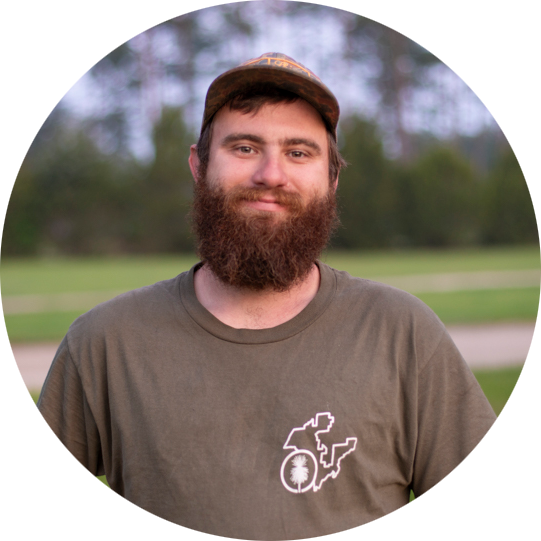
The independent study that I completed as part of my master’s was centered around genetic and disease sampling on feral swine. There has not been this type of study or collection on Ichauway before, so through a partnership with the USDA Animal and Plant Health Inspection Service (APHIS) Wildlife Services, I coordinated a sampling effort on the property. I completed the onsite collection and then sent the prepared samples to Fort Collins, CO, to be analyzed. It was found that the sampled swine were all closely related and experienced little genetic influence from transported swine. This suggests that the population dynamics of the feral swine population are influenced at the local scale, not from unlawful transportation. The samples were also tested for four feral swine diseases: classical swine fever (CSF), African swine fever (ASF), swine brucellosis, and pseudorabies. The latter two were found on the property; thankfully, the former two were not. If ASF or CSF are found within the US, it would have serious implications for feral swine management, domestic pork production, and trade. Finally, I presented a seminar to share this information with Jones Center staff to educate them on the genetic findings and some of the risks associated with the diseases found on the property.
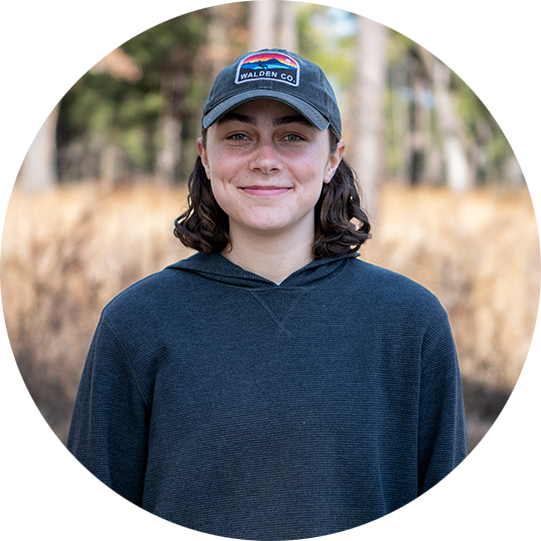
I do not have an official project yet; however, I am developing a project for the upcoming spring semester regarding the influence of mill closures on forest management decisions. I plan to assess the impact on Ichauway first, focusing on an upcoming fuelwood treatment we are overseeing. I will also contact other local entities to discuss how they have been impacted by mill closures in their area and how their management has shifted as a result.
The greatest strength of the Fellowship is the responsibilities we have as members of the Conservation team. The responsibilities lead to excellent hands-on land management experiences and allow us to better understand how various objectives must be balanced to maintain the ecosystems in which we work and meet the multiple natural resource goals of The Jones Center.
I believe one of the greatest strengths of the Conservation Fellowship Program is the wide array of projects that Fellows have the opportunity to work on during their time at Ichauway. I began the Fellowship in January of 2025, and I have had the opportunity to be involved in prescribed burning, invasive species control, endangered species management, forest inventory, education and outreach, and much more. I also appreciate that the program is also tailored to the individual interests and career goals of the Fellow. With my particular interest in forestry, I have been provided the opportunity to be involved with this side of the management more and led our forest inventory plot sampling this year.
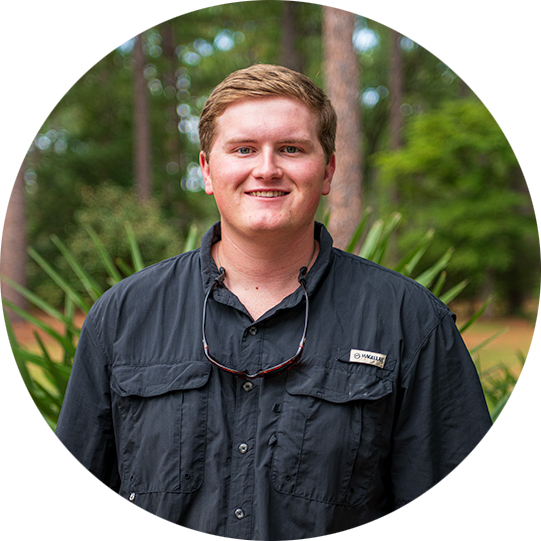
The greatest strength of the Conservation Fellowship is the experience you acquire while here. In my short two months, I have learned a multitude of new skills. Every day I encounter something new, and it provides me with experience and knowledge to carry on to my next job or future endeavors.
After completing the program, my career intentions are to continue working in upland game and habitat management. Ideally, I’d like to use game management as an avenue to reach various conservation goals.
Following the Fellowship, I hope to pursue a career as a Forester with the USDA Forest Service. I have a large interest in managing forestlands that serve as the interface between the public and the outdoors and ensuring their sustainability for future generations.
Following this program, I plan to work in the private sector of conservation and land management. My previous job with USDA NRCS allowed me to provide conservation technical assistance to landowners through federal incentive programs. I hope to find a job in a similar capacity, helping landowners put good conservation practices on the ground.
I would like to advise that when there is a task that needs to be done, be the one who does it. If you do not know how to do it, learn how it is done so you can complete that task in the future.
The Conservation Fellowship truly is a unique opportunity that has not only exposed me to the many sides of conservation but has also allowed me to meet a great number of working professionals and build connections that will last beyond my time here.
I hope to learn more about the wildlife and quail management of the property at Ichauway. My undergrad degree was in wildlife biology, so that is what piques my interest the most. Gaining the hands-on type of wildlife management experience from Ichauway is knowledge that I will be able to take with me throughout my career. Something I may experience here may come up again in my future, and it will allow me to tackle that situation adequately since I have been through that circumstance before.