It’s Been a Hard Day’s Night: UGA Scientists Study Day and Night Activity in Beetles in an Imperiled Ecosystem
Forests rely on beetles in many ways, from pollination and seed dispersal to nutrient cycling. But despite this importance, researchers still know very little about beetle natural history.
To help tackle this knowledge gap, entomologists at the University of Georgia, Mississippi State University, and The Jones Center at Ichauway spearheaded a new study examining beetle activity patterns in the longleaf pine ecosystem of Southwest Georgia.
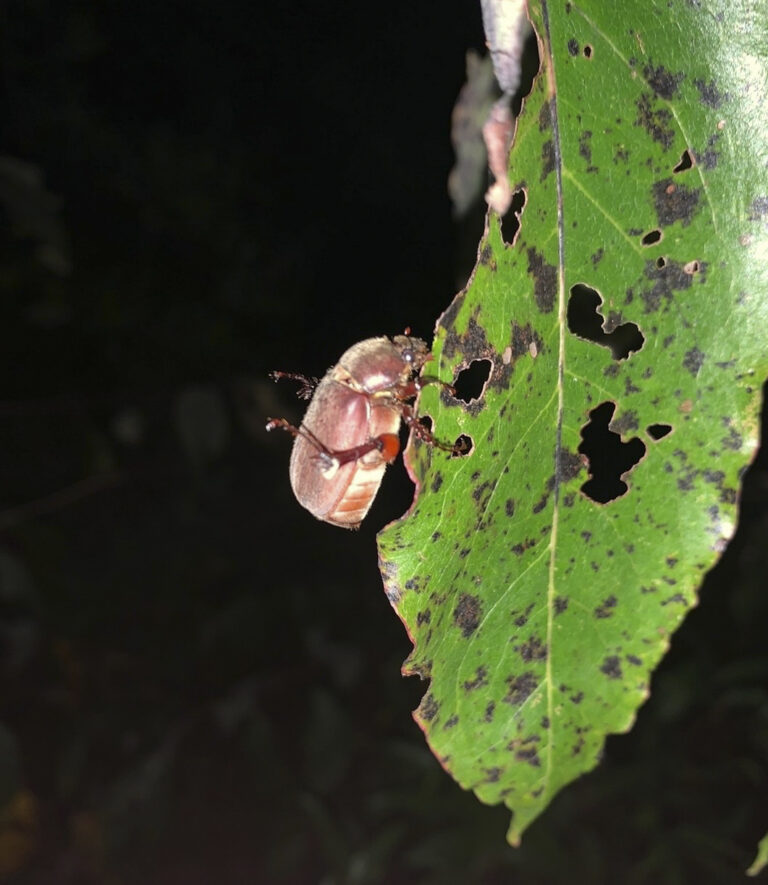
A scarab beetle encountered during the project at night, attached to a leaf. Photo Credit: Mary M. McTeague, Department of Forestry, Mississippi State University
Activity patterns of many insects, including beetles, are understudied. This information can reveal how light pollution, climate change, and other environmental stressors might impact beetle communities and help guide both conservation and management strategies.
“Some of these beetles are impactful pests to forests, but others are super beneficial,” said PhD candidate Thomas Sheehan, who is first author on the project. “Understanding their behavior can better inform management decisions to protect our forests.”
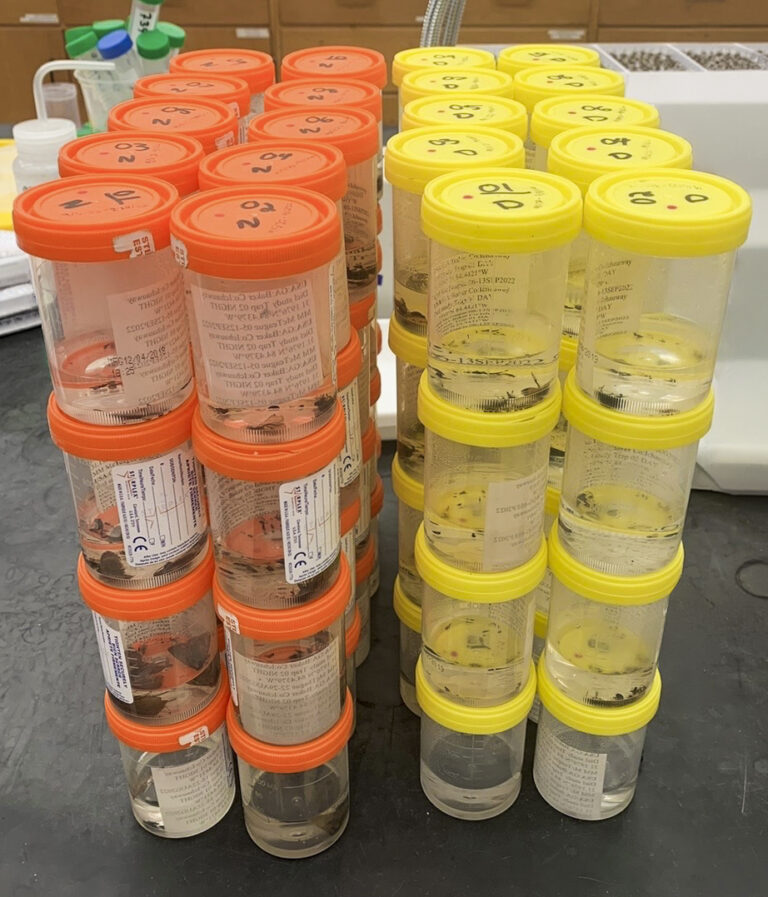
Trap samples were stored in jars, combined by time of day. Photo Credit: Mary M. McTeague, Department of Forestry, Mississippi State University
Over the course of one month, Sheehan and other researchers checked beetle traps daily at sunrise and sunset. They collected 135 species in total, including evidence for 6 beetle species active during the day and 11 species active at night.
Although they found several species that prefer a particular time of day, they also found some species active both day and night. Further, the researchers collected 4 beetle families and 77 beetle species that were not previously reported in the longleaf pine ecosystem.
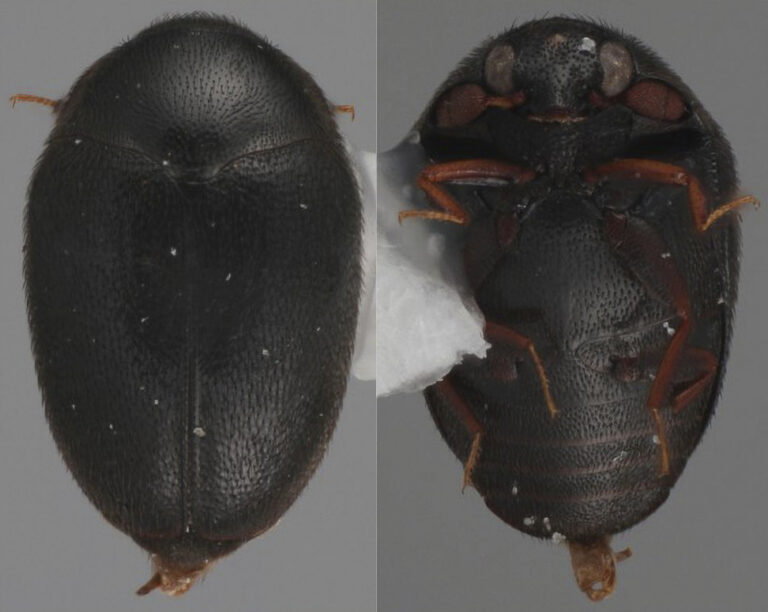
Cryptorhopalum floridanum (Dermestidae) was the second most abundantly captured beetle. The species is poorly known in the literature and had not previously been reported from the longleaf pine ecosystem
“It just shows how much more research on basic biology needs to be done,” Sheehan said. “Imagine if we didn’tknow that about elephants or raccoons. How would we manage elephants if we didn’t know when they’re active?”
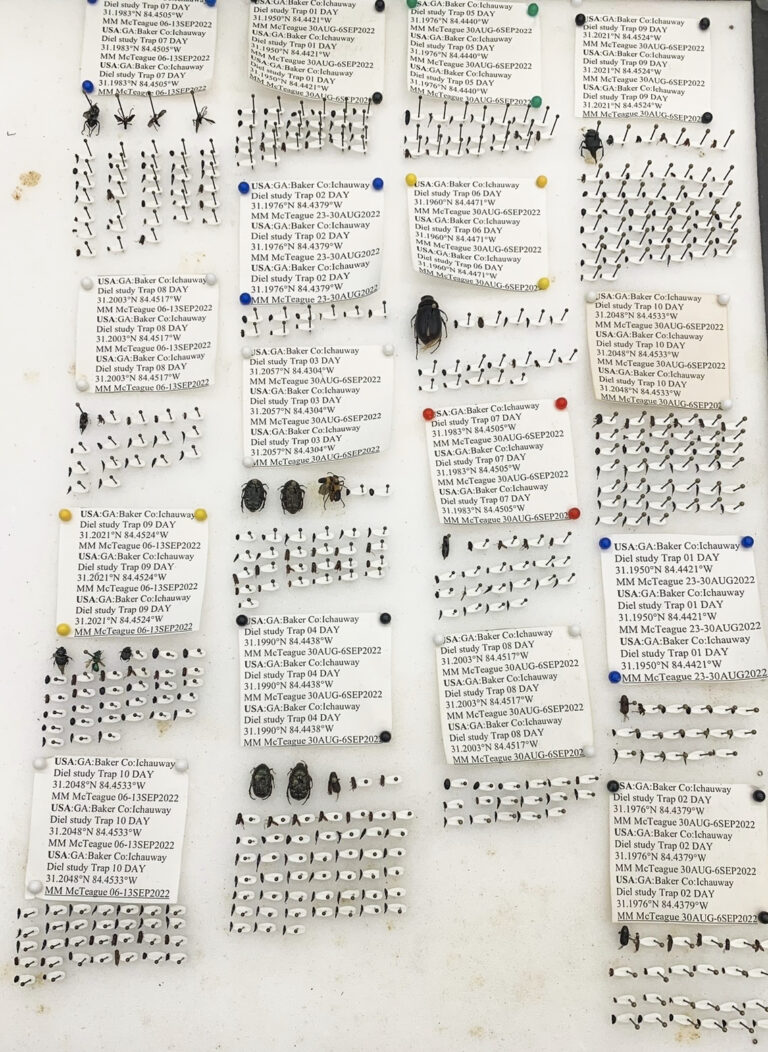
All beetles were mounted on pins or points to then be identified to species, or lowest possible level. Photo Credit: Mary M. McTeague, Department of Forestry, Mississippi State University
This new study is just one of the many needed to help researchers learn more about these abundant but understudied insects.
Published in The Coleopterists Bulletin, the study was made possible by several scientists and multiple funding sources from the University of Georgia and The Jones Center at Ichauway.