Managing Red-cockaded Woodpeckers Through Unpredictable Weather: A Conservation Challenge
An Uncertain Start
From severe drought to heavy rains, the 28th red-cockaded woodpecker (RCW) nesting season in our recovery program was marked by extreme weather conditions from the very beginning. Following last year’s record nesting season in 2025, the birds were met with a prolonged dry spell beginning in September 2025 that carried into the 2026 nesting season. Those conditions left our Conservation team unsure of how the season would unfold.
“Going into the year with one of the most extreme droughts in history, the birds were probably lacking in body condition and available forage,” said Jones Center Forestry & Wildlife Biologist Zach Henshaw. “In the past, we’ve seen extremely dry years negatively impact nesting effort and success. Going into the nesting season this year, conditions were very similar to those past years, if not worse. Unlike those previous down years, our overall population is much larger, so we weren’t sure what to expect.”
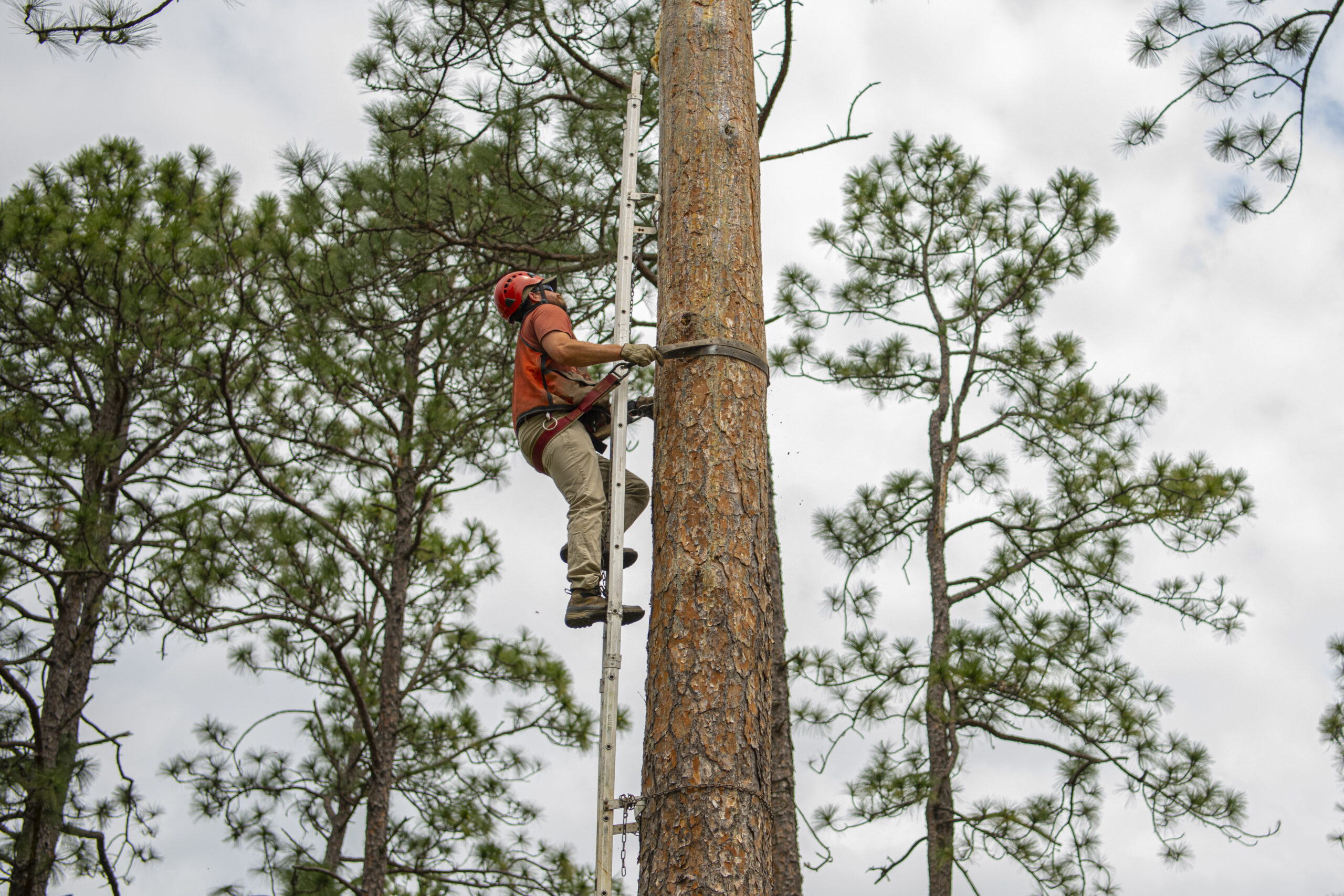
Henshaw climbing an RCW cavity tree.
A Change in Conditions
Increased rainfall in the middle of the nesting season drastically improved conditions across Ichauway. Vegetation rebounded, and insect abundance likely increased, providing the birds with more favorable habitat and foraging conditions.
“Weather conditions started improving right as we got into the heart of the season,” Henshaw said.As things improved, the RCWs made additional nesting attempts later in the summer, causing a longer-than-usual nesting season.
“I banded a nest on the last day in June, about 14 days later than the latest nest we’d ever banded,” Henshaw said.
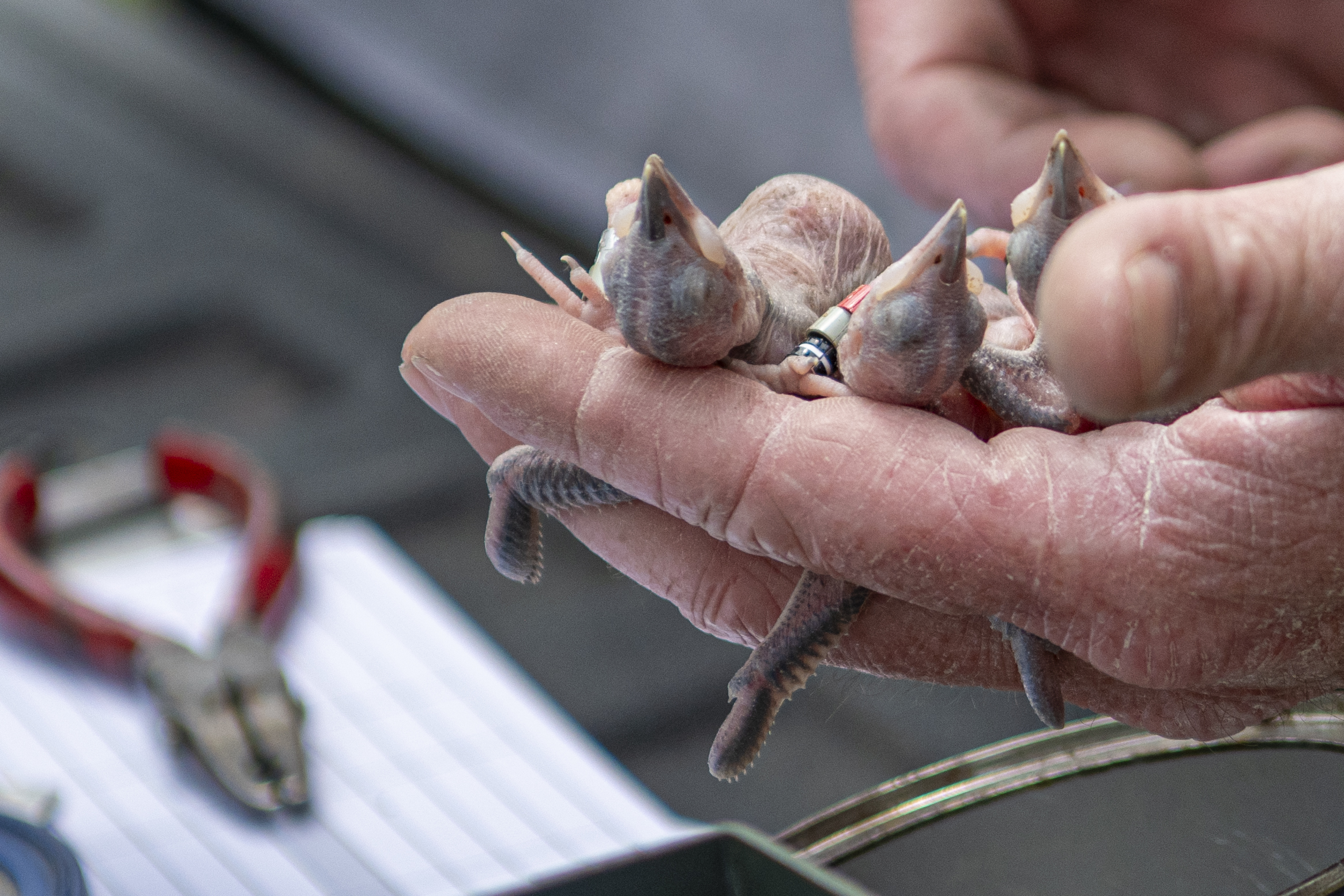
Freshly banded RCW chicks.
With Rain Comes New Challenges
While rainfall helped improve food availability later in the season, it also made other conditions more difficult. The timing of precipitation is impactful because prolonged or ill-timed rain can present its own set of issues.
“The timing, duration, and total amount of precipitation is influential during these nesting seasons,” Henshaw said. “You may get increased cavity competition from kleptoparasites when you get a lot of overnight rain and a lot of rain in general. Conversely, prolonged daytime rains can limit foraging windows and chick feeding.”
Heavy downpours can also fill nest cavities with water – displacing nests or forcing birds to spend more time protecting their nests and less time foraging. Kleptoparasites, including southern flying squirrels, compete with RCWs for cavities, making it more difficult for birds to successfully raise young.
“But the birds handled the rainfall swings well,” Henshaw said. “We still consider the season a success, fledging about 50 new birds into the population.”
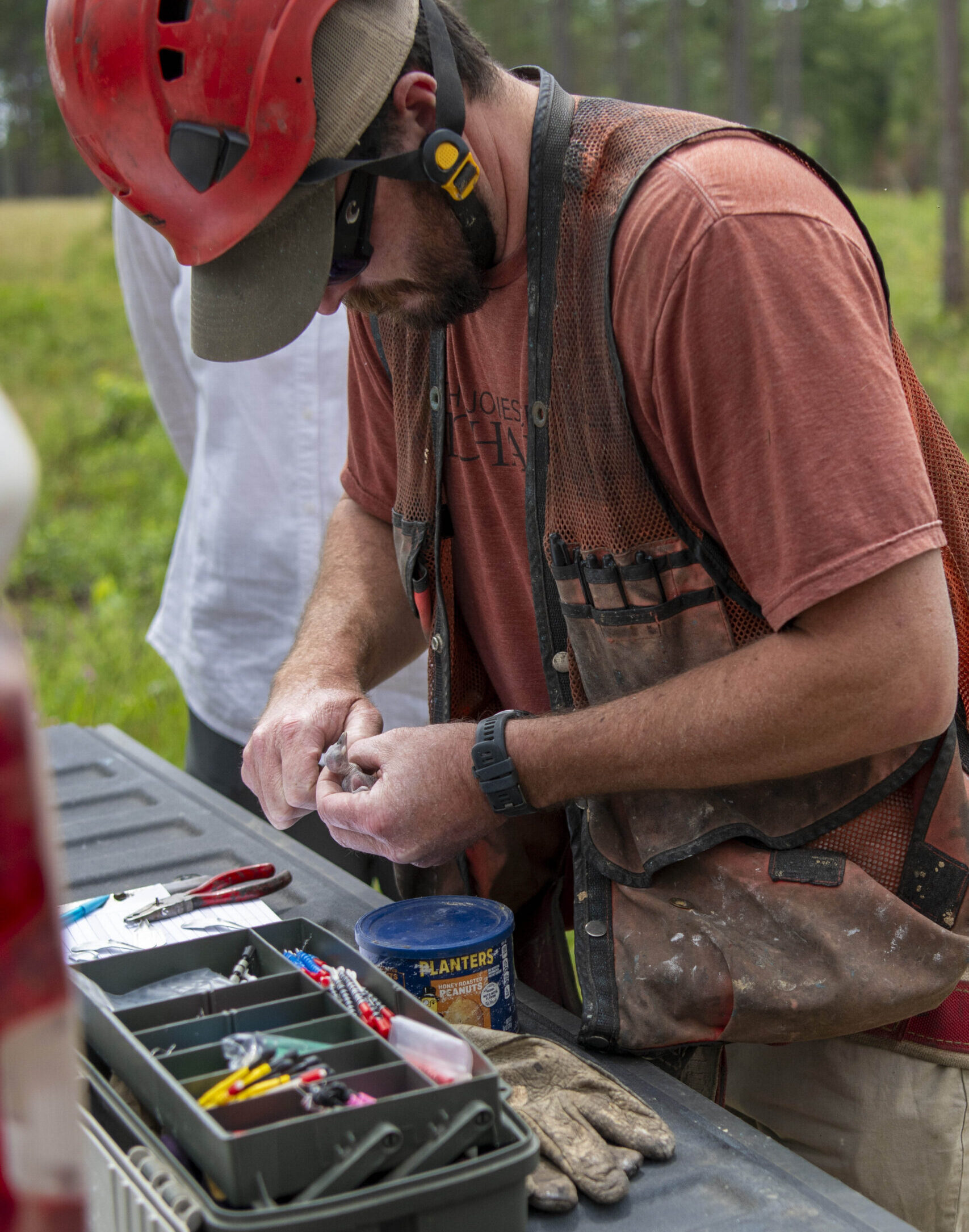
Henshaw banding RCW chicks extracted from a cavity.
Managing Habitat
Despite the challenges presented by unpredictable weather, long-term habitat management continues to support RCW populations at Ichauway.
“You’re not really managing the birds; you’re managing the forests, and ultimately cavity availability – which is the primary limiting resource for the birds on Ichauway,” said Henshaw.
The Jones Center’s Conservation team focuses on managing the open canopy pine habitat that RCWs depend upon. Through prescribed burning and cavity tree management on Ichauway, the team works to provide resources and suitable habitat for nesting birds. When RCWs begin excavating a natural cavity, known as a “start,” the Conservation team can drill the start to speed up the excavation process by years while still allowing the birds to finish creating the cavity on their own.
“What we can control is cavity availability,” Henshaw said. “Making sure they have enough suitable cavities to successfully nest in while still having enough cavities for other species. Ultimately a host of other species rely on these cavities as well – it’s the ecological role the RCWs play in the system, and why they are so important.”
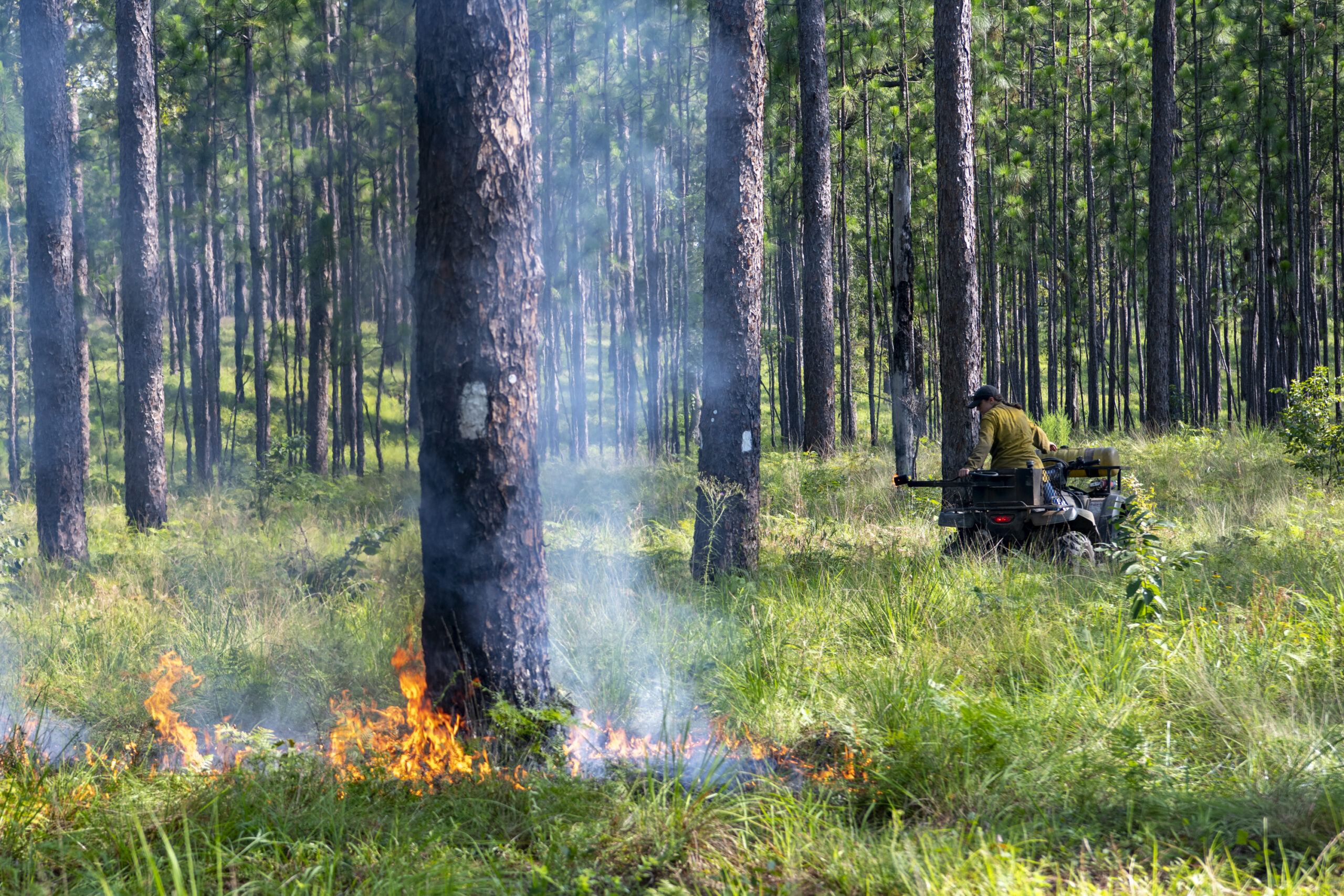
Prescribed fires implemented at Ichauway often involve prepping RCW cavity trees within burn units which includes interior ignitions to "build black" around the tree's base to reduce potential torching.
Conserving Through Partnership
The Jones Center’s commitment to RCW conservation goes beyond Ichauway through its partnership with the Southern Range Translocation Cooperative (SRTC). The Cooperative brings together state and federal agencies, private landowners, tribal communities, and conservation organizations to help establish and strengthen RCW populations across the Southeast by moving birds from established populations to suitable habitat.
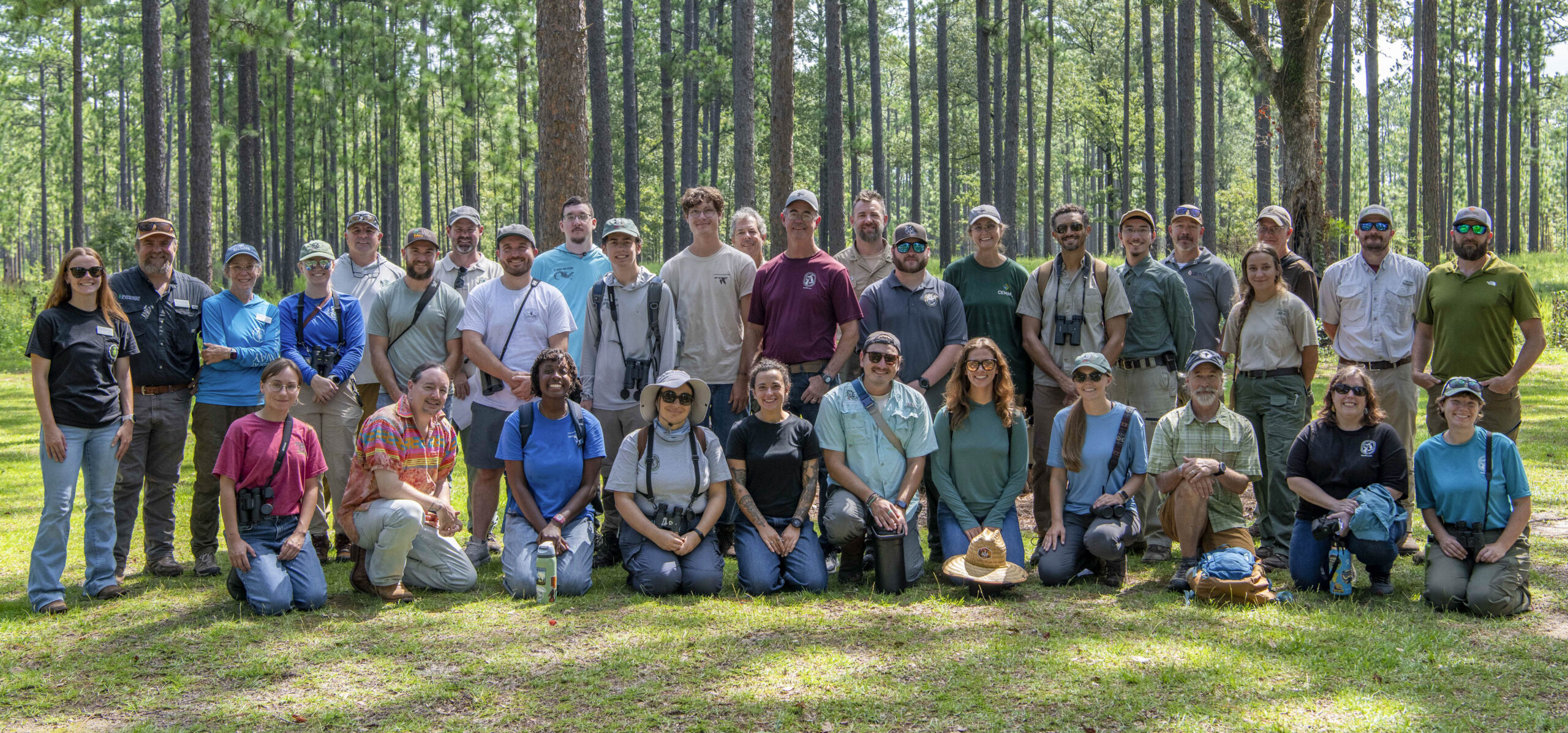
Representatives of the SRTC visiting Ichauway in August 2026.
The Jones Center was one of the first private organizations to participate in the cooperative, initially receiving birds to help grow the population at Ichauway. As the population expanded and became self-sustaining, the Center continued contributing by sharing its experience managing RCWs on private lands and supporting restoration efforts at other sites.
The Jones Center has also served as a supplemental donor when birds are available for translocation. In 2025, the Center helped establish a new RCW population at Chickasawhatchee Wildlife Management Area in southwest Georgia by assisting with cavity installation and providing birds for translocation.
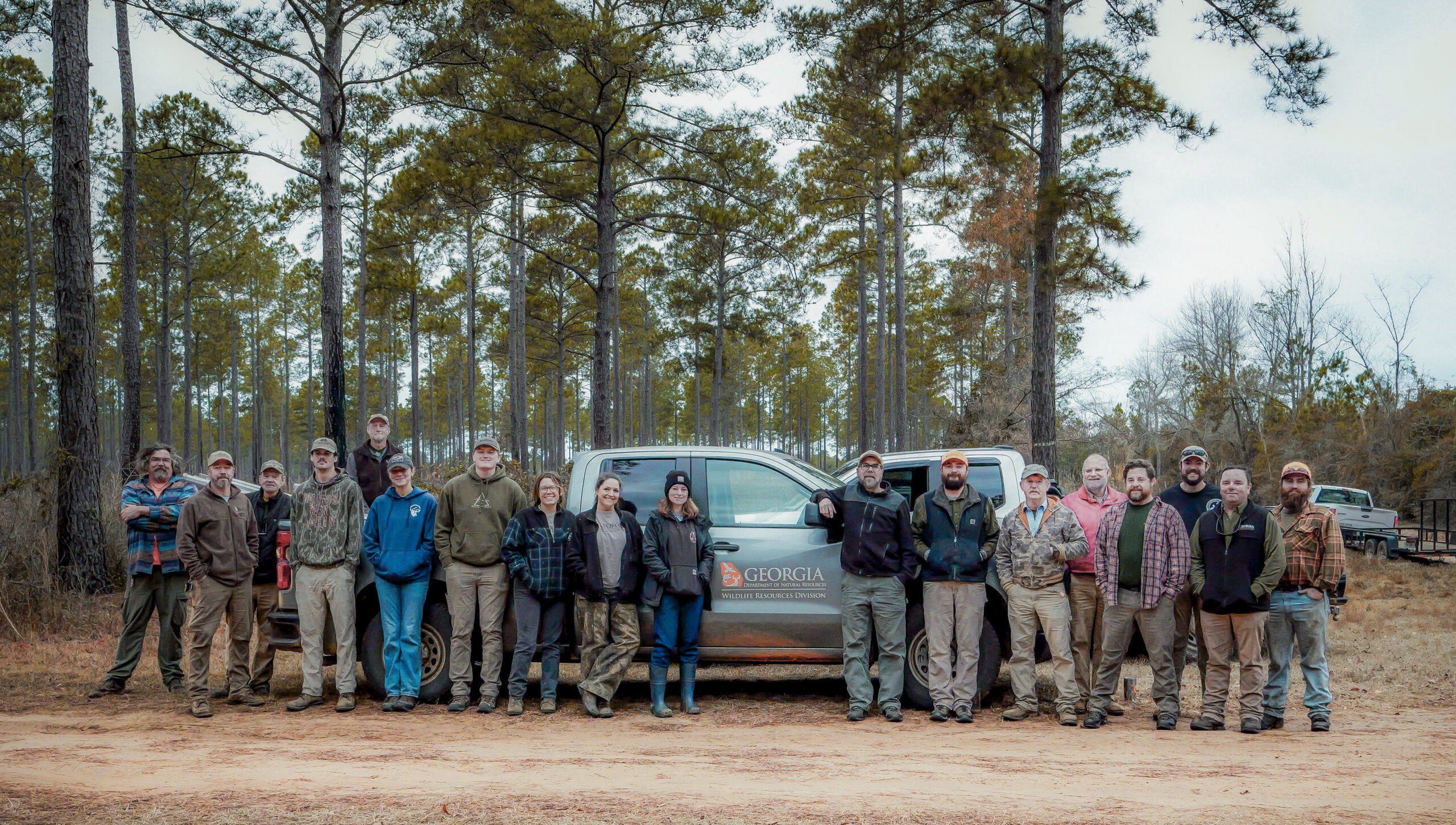
Partners that contributed to the red-cockaded woodpecker translocation to the Chickasawhatchee Wildlife Management Area, owned and managed by the Georgia Department of Natural Resources.
Special thanks to Zach Henshaw for his stewardship and contributions to The Jones Center at Ichauway’s RCW management program since 2019. We wish him luck in his new professional endeavors with The Longleaf Alliance.