Natural Resources Research & Management
Natural Resources Research & Management
For PhD student Chloe Hall, discovering her passion for wetland ecology began during her undergrad as an environmental science major at the University of North Carolina at Chapel Hill.
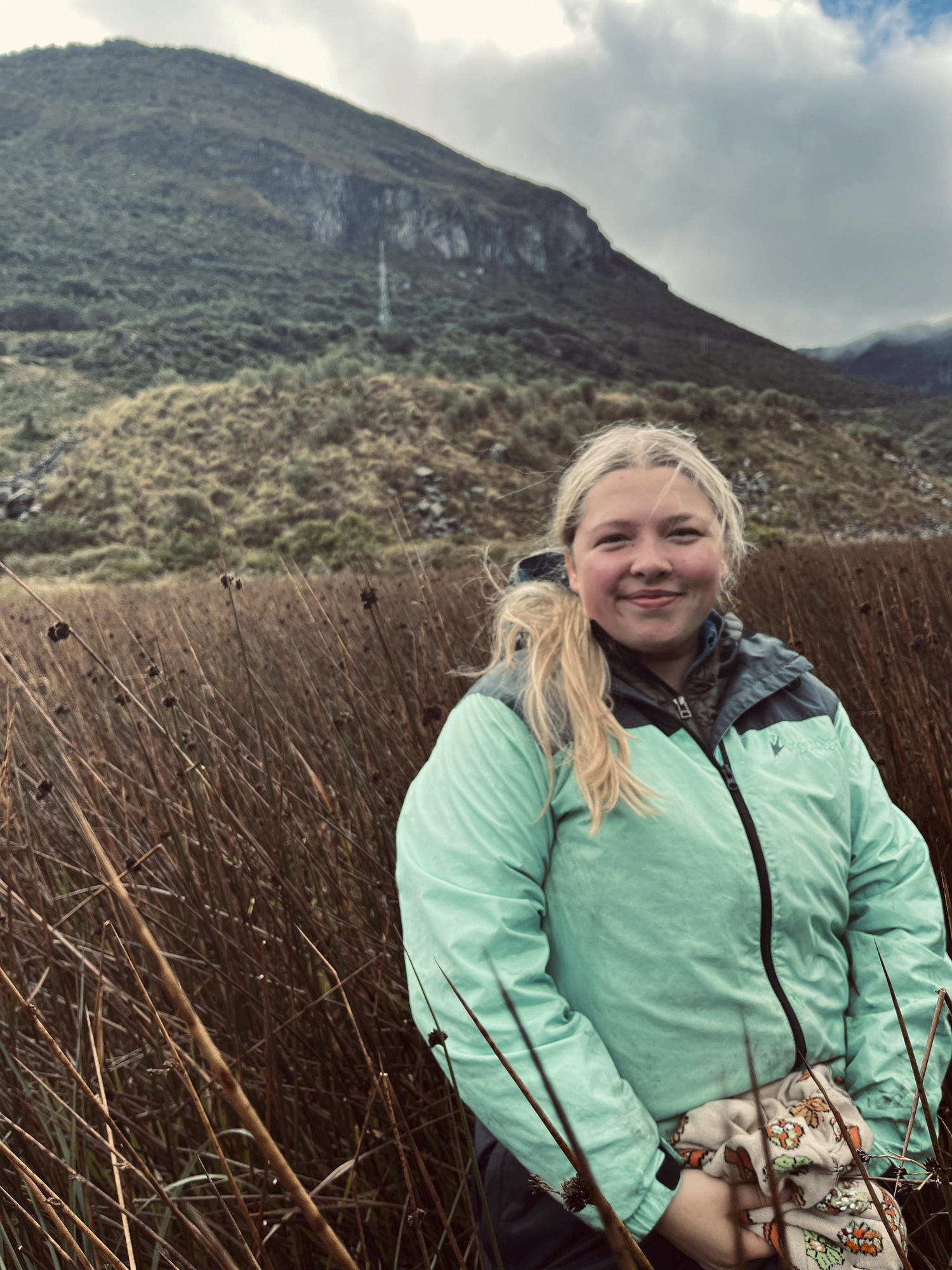
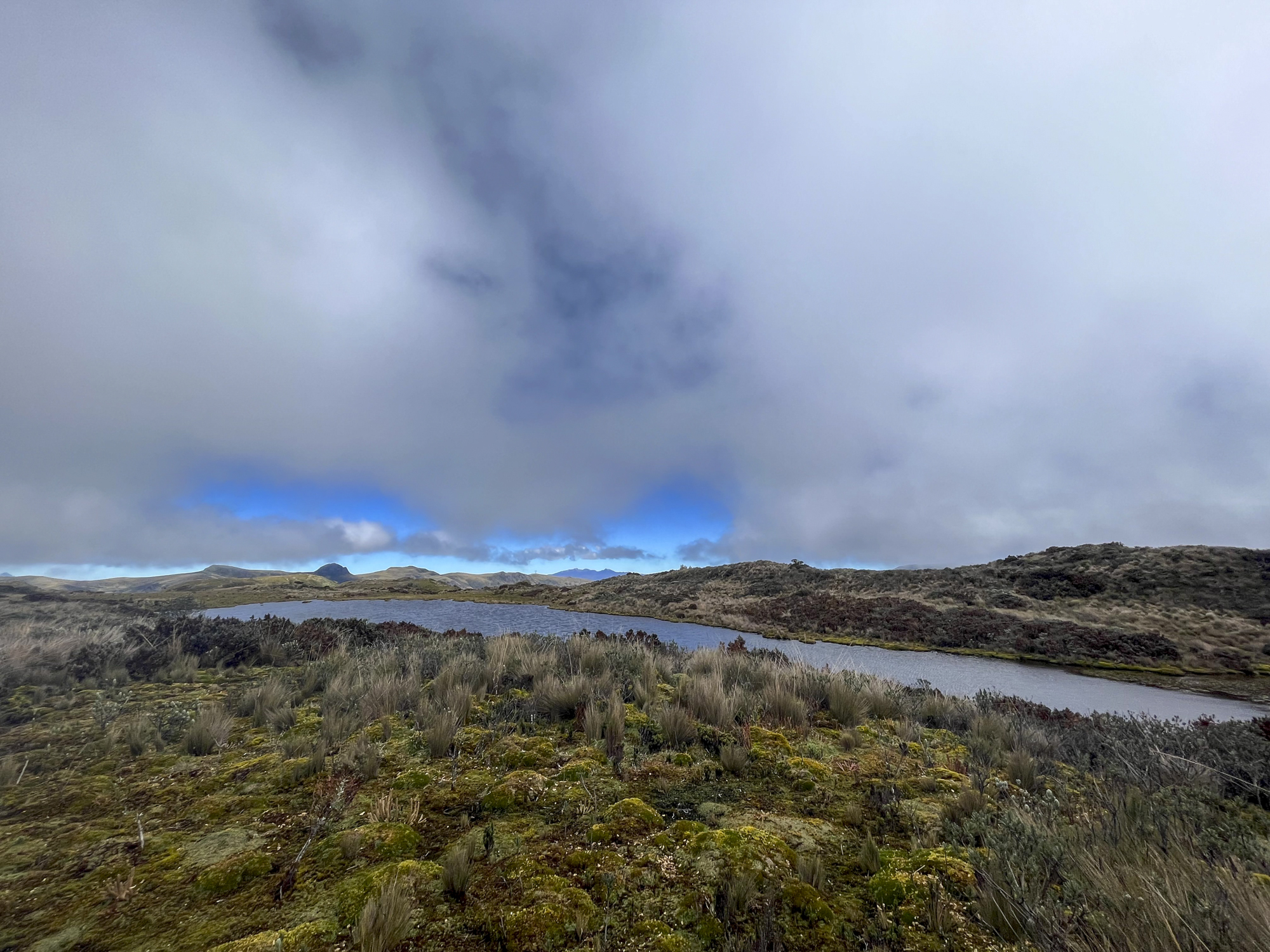
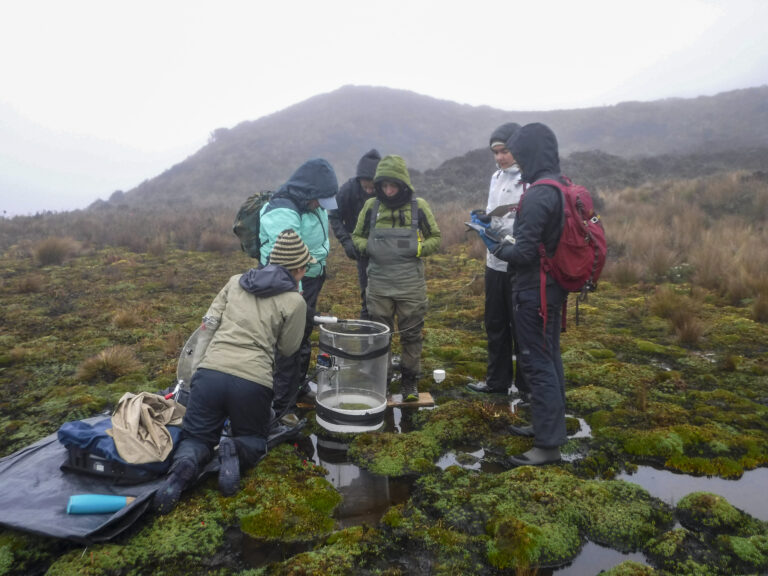
Hall’s undergraduate experience included a summer research internship in Ecuador, where she studied gas emissions in high-elevation wetlands in the Andes Mountains. Hall found the experience to be challenging but also very rewarding.
“That experience made my brain tick,” she said. “I always knew that I wanted to study environmental science, and I felt like I could have an impact on these wetland ecosystems.”
Not only are wetland ecosystems beautiful and serene, but they also provide hidden ecosystem services. Wetlands play an important role in Earth’s climate, both through carbon storage in sediments and emission of greenhouse gases, including carbon dioxide (CO2) and methane (CH4). Hall’s dissertation will focus on how these gases vary within and across Ichauway’s wetlands.
“Exploring the invisible side of these ecosystems is incredibly important,” Hall said. “It’s these gases that help us understand many components of carbon cycling in wetlands, and we can monitor how they change over time.”
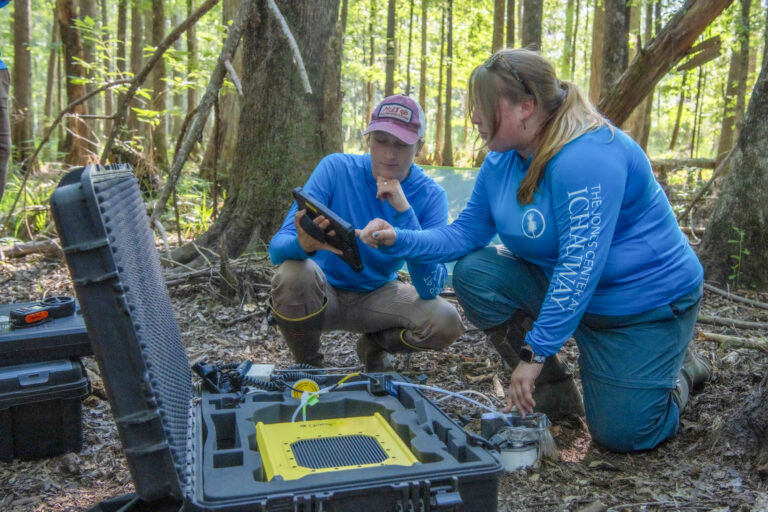
Hall’s fieldwork in the Andes equipped her with the skills to use a portable gas analyzer. At Ichauway, Hall’s skill set is highly valued because, before her work began, researchers had no way to directly measure how wetlands produce, use, and store greenhouse gases. Now, researchers can measure greenhouse gas emissions with high accuracy.
To collect emissions data, Hall’s research uses a portable gas analyzer and lab-made chambers that are deployed either on the water surface or bare sediment in wetlands. The gas analyzer measures gas concentrations every 5 seconds, and emissions are calculated from the rate at which those concentrations change over a 3-minute period. To explore short-term variability in emissions, Hall employed diel sampling, a method of constant data collection over 24 hours. Throughout the process, she sets up soil and floating chambers made from 2.5-gallon buckets. To identify patterns across Ichauway, Hall will measure emissions at six different wetlands over the summer of 2026 and beyond.
“These measurements have never been made in Ichauway wetlands before,” said Aquatic Scientist and Hall’s co-advisor Dr. Nick Marzolf. “It’s very descriptive work that allows us to make comparisons across the site, including between our two different types of wetlands — forested swamps and [grassy] marshes.”
Each wetland type shows variations in canopy cover, soil type, and root systems. Cypress trees provide high canopy cover in forested swamps, whereas marshes have minimal to no canopy cover. Each wetland type shares a defining trait, however. “Our wetlands are special here, especially in the Dougherty Plain [of southwest Georgia], because they dry down and re-wet seasonally,” Hall said.
It’s these drying and re-wetting patterns that can alter methane and carbon dioxide production as seasons change. The term ‘carbon sink’ is often used to describe wetlands, but Hall says she wants to challenge this idea slightly.
![“It’s important to understand that these wetland systems can shift between being a carbon sink and a carbon source,” she said. “[We think] it’s all dependent upon hydrologic conditions and atmospheric temperatures, so we need to shift our thinking to these being dynamic systems.”](https://www.jonesctr.org/wp-content/uploads/elementor/thumbs/Measuring-the-Invisible-Chloe-Hall-quote-e1784057493679-rqer1h37hk0yn3e91pw8mdb8bz6z1z6sjnx644dg7g.png "Measuring the Invisible – Chloe Hall quote")
Peering up at the cypress canopy, Hall compared each wetland on Ichauway to a snowflake, while also describing them as bowls of nutrient soup. “I think the more time I spend out here, the more I realize how interesting and unique these wetlands are,” she said.
As she motioned toward the portable gas analyzer, Hall noted how her career has come full circle. “When I left Ecuador, I never imagined I’d be doing this exact type of fieldwork again, but every lab I have worked with since has used this type of equipment,” she laughed.
Hall is excited to see where her research leads in the years ahead and to continue studying wetlands at a place as unique as The Jones Center at Ichauway.
Chloe Hall is a PhD student at The University of North Carolina – Chapel Hill and The Jones Center at Ichauway co-advised by Dr. Amanda DelVecchia and Dr. Nick Marzolf. Read more about the work of the DelVecchia Lab and the Aquatic Sciences Lab. Hall’s work is part of a larger research effort by The Jones Center at Ichauway and partners studying many of the 10,000+ wetlands of the Dougherty Plain of southwest Georgia – a geologically unique and wetland-rich landscape.