
Natural Resources Research & Management
Natural Resources Research & Management
The Woods to Water (W2W) project is an experience-based post-baccalaureate learning program aimed at helping early career scientists understand critical linkages between terrestrial and aquatic ecosystems. Over a 12-month period, participants will be introduced to standardized field techniques and data collection, conduct an independent study with a research mentor, and present a research poster at the program’s end. Funding was provided by a National Science Foundation Research and Mentoring for Postbaccalaureates (NSF RaMP) grant to The University of Alabama and The Jones Center at Ichauway in partnership with NSF’s National Ecological Observatory Network (NEON).
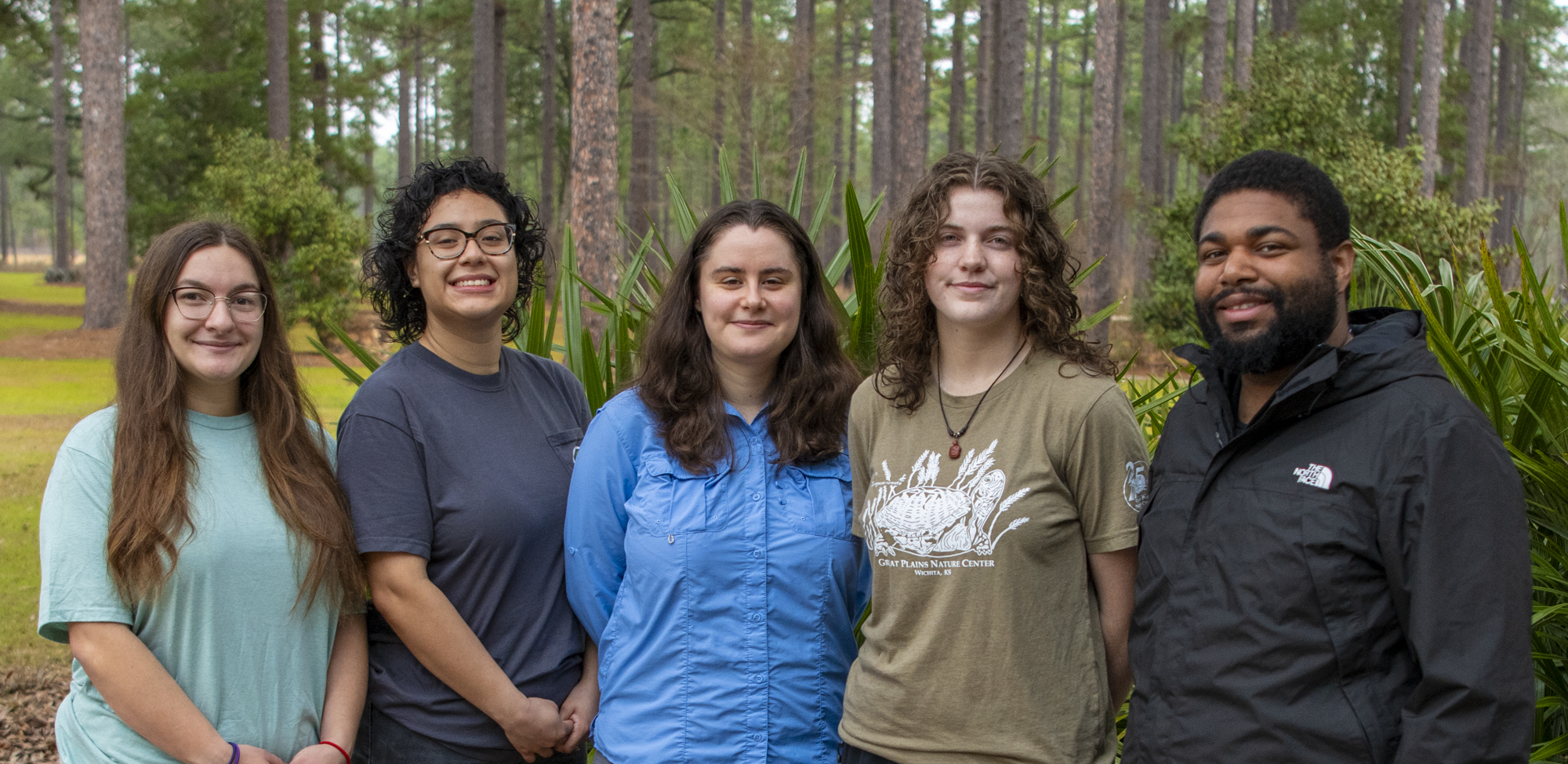
On February 18th, we welcomed the second cohort of year two’s RaMP Fellows to Ichauway. After spending six months at the University of Alabama, these early-career scientists will spend the next 6 months with our staff learning about our natural resources where they’ll complete the remainder of the program. From left to right, we have Isabella Rios, Giselle Hernandez, Gabby Kupper, Laura Phillips, and James Hawkins. Read more about them below:
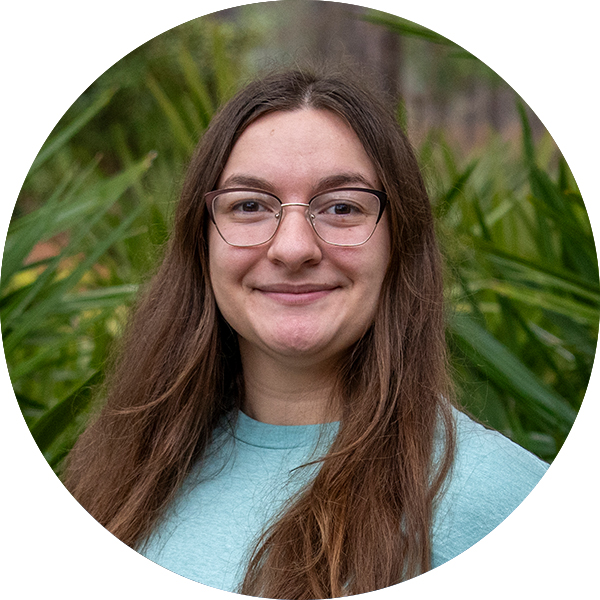
Hello! I am Isabella Rios and I am from San Antonio, Texas. I spent my college years in the beautiful desert mountains of El Paso, Texas at the University of Texas at El Paso (UTEP). At UTEP, I received my B.S. in Ecology and Evolutionary Biology and a minor in Museum Studies. I worked closely with Dr. Brett Seymoure in the Entomology Collections and created some educational programing at the Centennial Museum and Chihuahuan Desert Gardens. Under Dr. Seymoure, I helped look at the effects of light pollution on insect populations and changes in animal behavior. Outside of school and work, I love trying new activities. Baking, playing games (card, board, and video), and hanging out with my friends are definitely my top favorite activities. I have started more new hobbies and projects than I would like to admit, but it opens my world to so many new things.
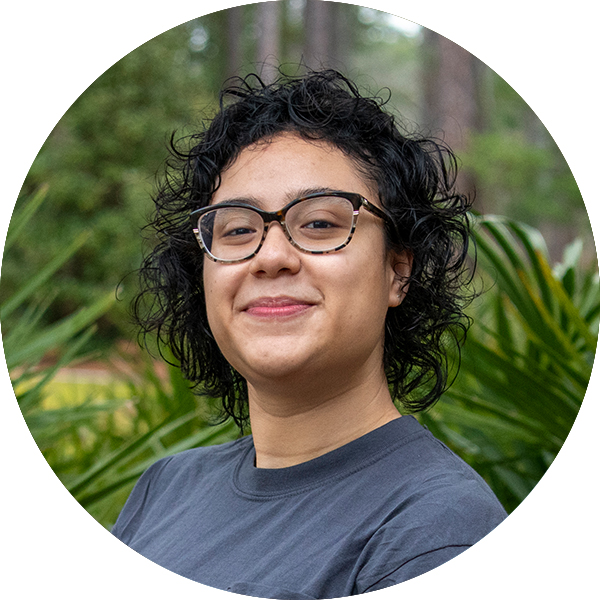
My name is Giselle Hernandez, and I am from Chicago, Illinois. I attended Northern Illinois University (NIU) to earn my B.S. in Environmental Studies with an emphasis on Biodiversity and Environmental Restoration and a minor in Geology. My undergrad journey wasn’t linear. I attended two previous schools prior to NIU, with one year of it being in a hybrid setting because of the Covid pandemic and another year of me being a part-time student. I didn’t get a chance to involve myself in research studies or connect with my professors until I transferred to NIU. During my last summer of undergrad, I got accepted to an REU (Research Experience for Undergrads) that was hosted by one of my professors at NIU. My research during that program took place in the Puerto Morelos, Mexico and looked at microplastics in the natural sinkholes in the Yucatán Peninsula. I still collaborated with my project partner and advisor, but I got to learn for the first time to construct a protocol, do data cleaning and analysis, and create a poster to showcase at conferences. It was through the REU, that I got to learn about post-baccalaureate postings and gave me the confidence to apply to the Woods to Water program.
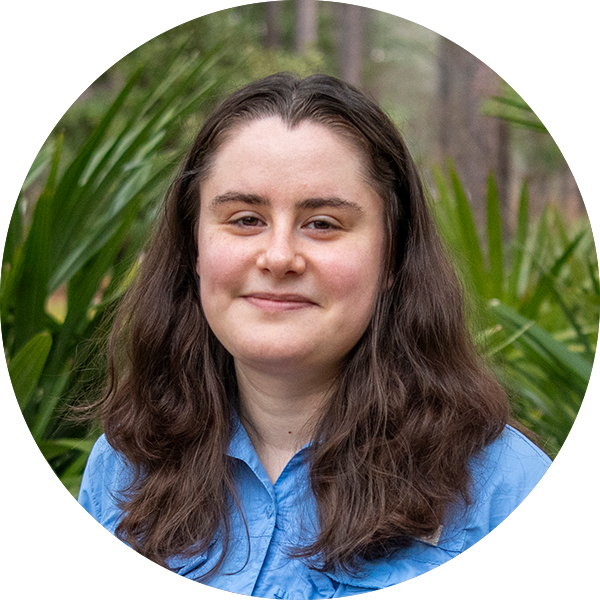
My name is Gabby Kupper and I am from Marquette, in the Upper Peninsula of Michigan. I graduated from the University of Michigan with a B.S. in Earth and Environmental Sciences and Interdisciplinary Astronomy and a minor in Asian Languages and Cultures. I completed an honors research project in the Ecology and Evolutionary Biology department, co-advised by Drs. André Green and Mónica Carvalho, studying how monarch butterflies are impacted by increased fertilizer use on milkweed. Most of my fieldwork experience was thanks to two summers: one at the Biological Station in northern Michigan in 2023, and one at Camp Davis in Jackson, Wyoming in 2025. Both experiences increased my interest and experience in fieldwork for geological, ecological, and aquatic research.
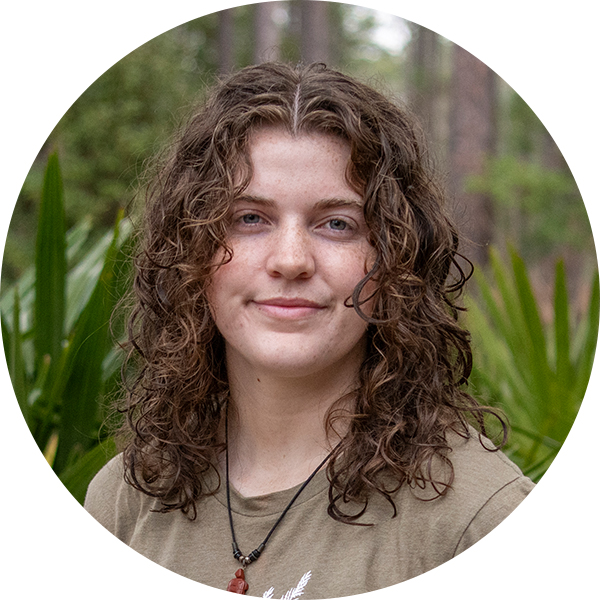
Hello, my name is Laura Phillips! I am from Arlington, TX and graduated from Sam Houston State University with a degree in Environmental Science with a concentration in sustainability. During my undergraduate career I was able to intern with the Texas A&M Forest Service out of their Hudson office for a summer. There, I learned how to timber cruise and helped establish some research plots for a Longleaf Pine Restoration project. Additionally, at my university I participated in an ornithology lab, and my senior year I collaborated with a professor on his research project studying how climate change will impact karst aquifers and how this can be modeled. I have always loved interdisciplinary work as my background reflects, but classes I took in my senior year and my participation in this program have cemented my interest in the biogeochemistry of soil and water.
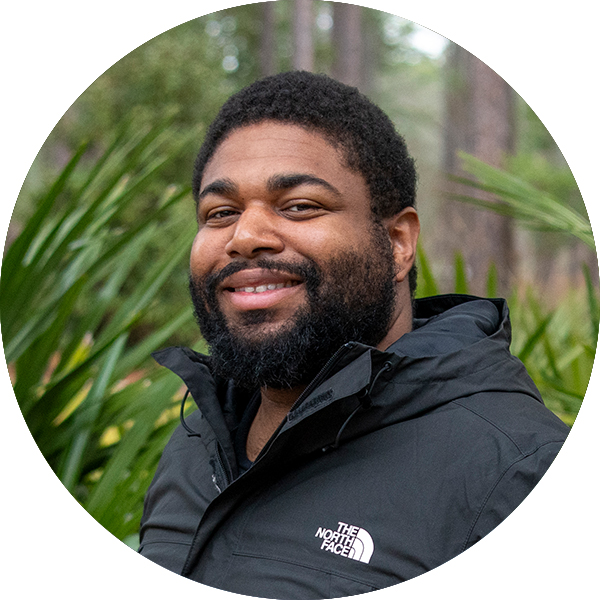
My name is James Hawkins, and I grew up in a rural community in North Carolina where spending time outdoors was a normal part of everyday life. I earned a B.S. in Fisheries, Wildlife, and Conservation Biology from North Carolina State University where I developed a strong interest in freshwater ecology and conservation. Before joining the Woods to Water (W2W) program, I stayed engaged with science and conservation through a variety of roles. I interned on a research project assessing threats to the Neuse River waterdog, an imperiled aquatic salamander native to North Carolina. I also worked in a park stewardship role, helping maintain public lands and supporting restoration efforts.
Growing up, I loved being outdoors. I made a lot of mudpies, dug some holes, and enjoyed finding new creatures in my backyard. I developed an interest in the outdoors and in the wonders that it held. The Kratt brothers fed that interest with shows like Zoboomafoo and Wild Kratts. They would always talk about ways to better help creatures and preserve their habitats. They inspired me to want to be a part of that. I love learning about ways that we as humans can affect the behaviors of animals and ways to prevent negative impacts on those behaviors. I also want to gain more insight into positive effects we can have on the environment and ways we can return it to be more similar to its natural history.
I was introduced to environmental science my senior year of high school when my academic advisor recommended me to take AP Environmental Science. I really enjoyed the brainstorming to find solutions to complex environmental problems and showed me that I could contribute to a greater good by involving myself in environmental sciences.
Additionally, my favorite classes to participate during my undergrad were the conservation and restoration classes because my professor implemented a lot of hands-on projects that took place in the prairie on campus and nearby prairie owned by The Nature Conservancy.
I started out majoring in Astronomy, but after taking some classes in earth science I realized I wanted to explore the environmental side more, so I added a second major. After taking the summer courses at the Biological Station, my interest in evolution, ecology, and genetics increased. The course on ecological evolutionary developmental biology led me to start research in the monarch lab with Dr. André Green. Since I also wanted a focus on the environment, I decided to study fertilizer affects on monarchs. This led me to develop an interest in how organisms evolve as the environment changes.
I grew up in a nature loving family, enjoyed being outdoors, and always loved science classes growing up. This is what persuaded me to first study environmental science. In one of my classes, I read a paper about fish in the Thames River experiencing endocrine disruption that could be linked to estrogenic substances from effluent releases. This was beyond the scope of what I knew about how humans impact the environment. This sparked my interest in anthropogenic (human-caused) influences on biogeochemistry. I want to understand how humans have chemically altered the environment and how to combat it to protect and conserve ecosystems.
My interest in ecology began in the woods and creeks near my home in rural North Carolina. Growing up, I spent a lot of time outside catching tadpoles in local streams, listening to birds in the morning, and watching fireflies light up summer nights. Those experiences, along with wildlife documentaries I watched as a kid, sparked an early curiosity about the natural world. As I got older, that curiosity turned into a deeper appreciation for how ecosystems function and how easily they can be disrupted. I became especially interested in freshwater systems and the species that depend on them. Learning about how habitat loss, pollution, and other pressures affect aquatic ecosystems made me realize how important conservation work is.
I have enjoyed spending time in the field. Before Woods to Water, I did not have much field experience. This program has given me a lot of experience in that aspect. I have also learned a lot about RStudio, which I had no experience prior to this program. I have been able to sharpen my skills in science communication, which was something I was really looking forward to. After this program, I would like to work more in the museum field. More specifically, I would like to work in the education or communication section to make science knowledge more accessible for all ages and walks of life. My passion lies in sharing knowledge, and by learning the ins and outs of the behind-the-scenes work of research, I can better communicate the information provided. I am still considering the possibility of grad school and spending time focusing on disturbance effects on animal behavior.
Before starting this program, my knowledge in forestry was limited but it has been rewarding to gain new skills and comprehend a new profession. I also had basic knowledge on data analysis and didn’t have prior R skills, so it has been one of my favorite skills to learn. I’ve been enjoying both improving my R skills and better understanding of statistical analysis and the hands-on field experience in both the National Ecological Observatory Network (NEON) and The Jones Center at Ichauway.
My goal before (and since) starting this program was to explore a variety of science fields. I wish to explore as many environmental fields as possible to have basic understanding of each one in case I collaborate with other experts in the future, and I believe the skills taught can be integrated in any career field.
The W2W program has allowed me to expand my knowledge of other organisms, and how they respond to environmental impacts. I am researching how trees respond to wind damage by looking at seed reproduction and vegetation structure to better understand how climate change reshapes ecological and evolutionary processes. I have also been introduced to technical fieldwork, and how protocols are created to produce accurate results. Working with NEON allowed me to collect data I had not yet been exposed to, such as mosquitoes, small mammals, beetles, and soil. I was also safety-trained for tower work, an opportunity I would not have had otherwise, but that I believe has provided me with numerous skills. After completing the program, I hope to either attend graduate school for an M.S. related to evolutionary biology, or to continue science training in another post-bacc program or technical job. I aim to work in an industry that applies research on how organisms adapt to environmental change to predict their future evolution and guide better conservation decisions.
I enjoy how multifaceted the program is. This program has provided me with so many varied ecology and professional development experiences that have given me opportunities to learn and grow as a scientist. Additionally, I have enjoyed the cohort and community with this program. Getting to be around so many ambitious like-minded individuals within ecology has been inspiring and fun! After completing this program my goal is to attend graduate school and continue studying biogeochemistry.
One of the things I have enjoyed most about the Woods to Water program is the opportunity to work alongside researchers and other fellows who share a passion for ecology and conservation. The program has allowed me to gain hands-on experience with field research, scientific methods, and new analytical tools while exploring ecosystems that are different from those I grew up around. It has also been exciting to experience new landscapes, wildlife, and technologies while collaborating with scientists who are studying connections between terrestrial and aquatic ecosystems.
After completing the W2W program, my goal is to continue technician work and eventually pursue an M.S. in ecology, conservation biology, or a related field. I hope to continue developing my research skills and eventually contribute to conservation through a combination of scientific research, environmental education, and science-informed management.
Personally, I much more enjoy a mystery or fantasy book, so I would recommend the podcast “Ologies.” I love that each episode has a different focus of study and it allows me to stay engaged with many fields of science, even ones I may not have much knowledge of. Some of my favorite classes in high school and college were not related to ecology but instead different sciences, so this podcast allows me to remain engaged with those topics even when not in that field.
I would recommend reading Superman’s Not Coming: Our National Water Crisis and What We the People Can Do About It by Erin Brockovich. Though this book focuses on groundwater contamination, I think the book’s message can be relevant in other environmental fields and has encouraged me to want an occupation that gives me the ability to have a direct positive impact on the environment. I first watched the film that was released two decades before the book that I would also recommend.
I recommend the book Four Fish by Paul Greenberg, which uses four of the most consumed fish (salmon, sea bass, cod, and tuna) to examine the sustainability of seafood. The author talks about the shift from wild-caught to farmed fish and the environmental impact of overfishing and aquaculture. Although ideas for management are introduced, I think the most beneficial part of the book was understanding the impacts of overfishing and aquaculture and how they go unnoticed by some but are experienced by many.
Rather than a book, I recommend reading articles and other media about the Ahupua‘a system. This is a traditional Hawaiian land management system that was used to sustainably manage the land. It divided land for communities by ensuring each division included lots of varied natural resources from different climatic zones from the mountain to the ocean. This system was also built on self-sufficiency, so it included economic and social structures to keep communities and their resources functional. I believe learning about these practices formed from the sustainability required to survive on an island can help inform environmental stewardship in the modern world.
Instead of a book I’d recommend a Podcast called “Skeleton Crew.” The hosts cover a wide variety of new paleontological discoveries and compare these with how ancient life is depicted in media, particularly through the lens of video games and paleo documentaries. It’s a must listen not only for paleontology enthusiasts but for anyone with an interest in sciences.