Natural Resources Research & Management
Natural Resources Research & Management
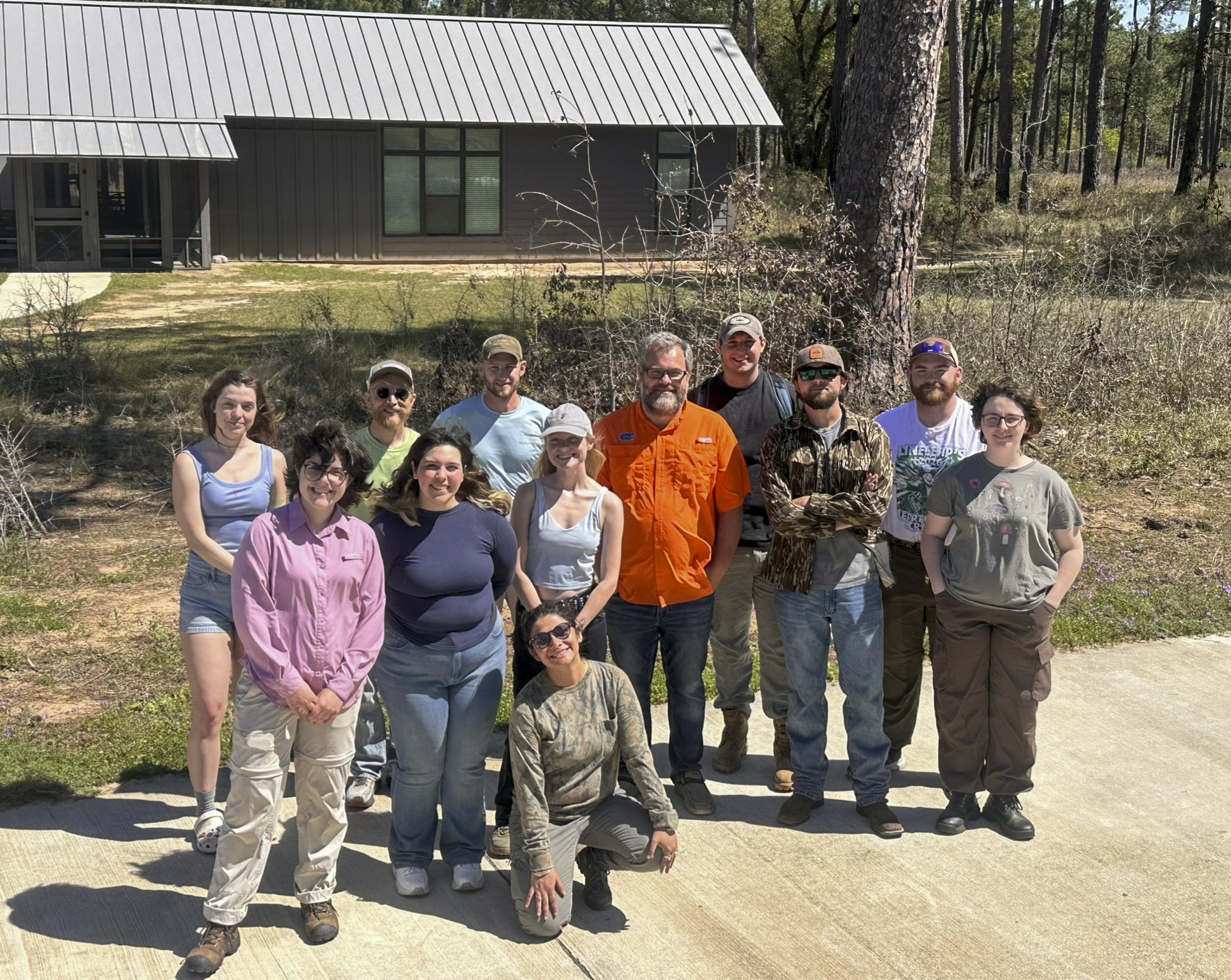
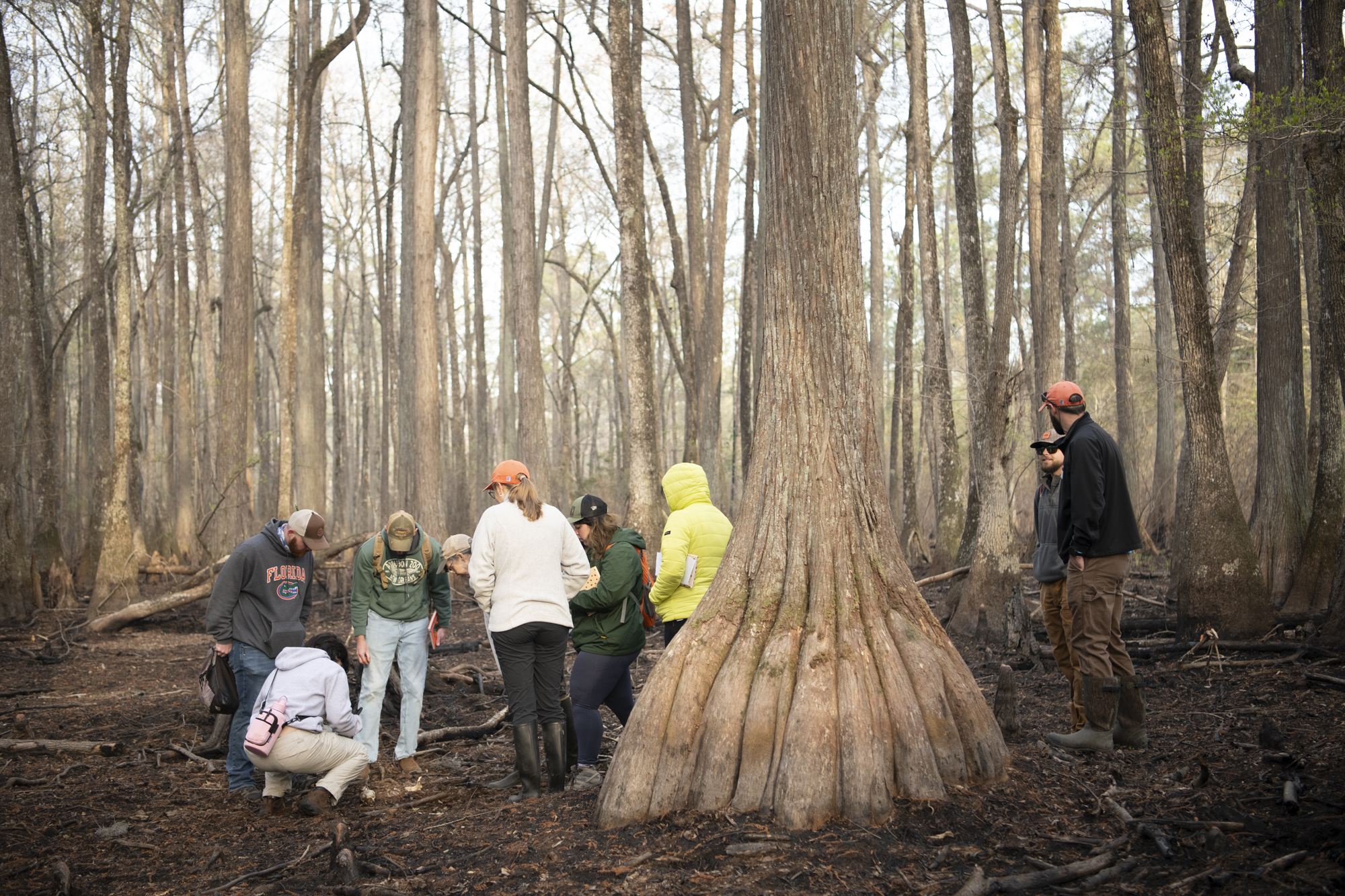
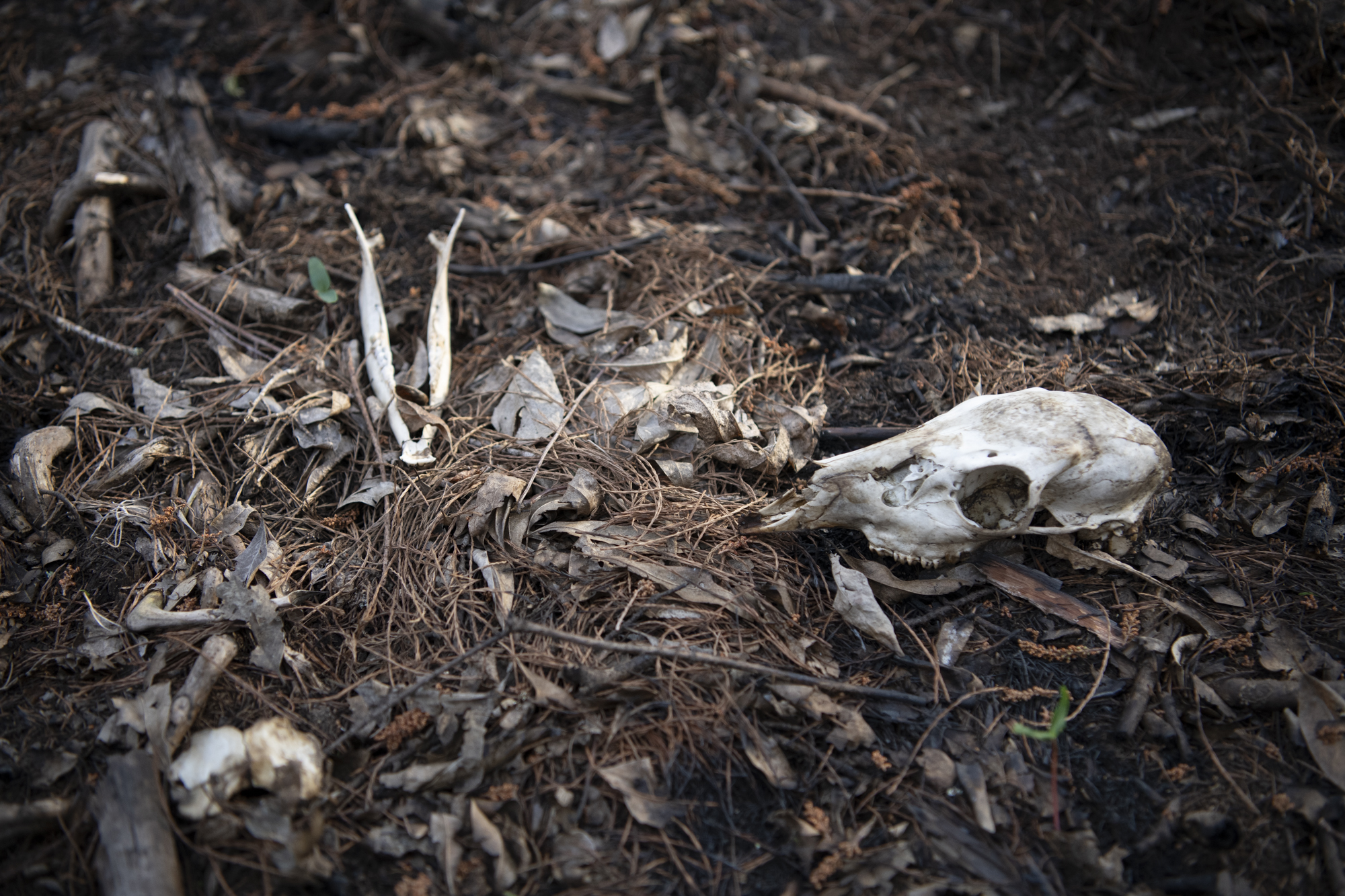
On the dry ground of an ephemeral wetland, students from the University of Florida marveled at a small pile of deer bones at their feet. Spotting wildlife remnants was just one of the exciting discoveries uncovered during the students’ six-day stay at The Jones Center at Ichauway. By the conclusion of their visit, the experience solidified career paths for some.
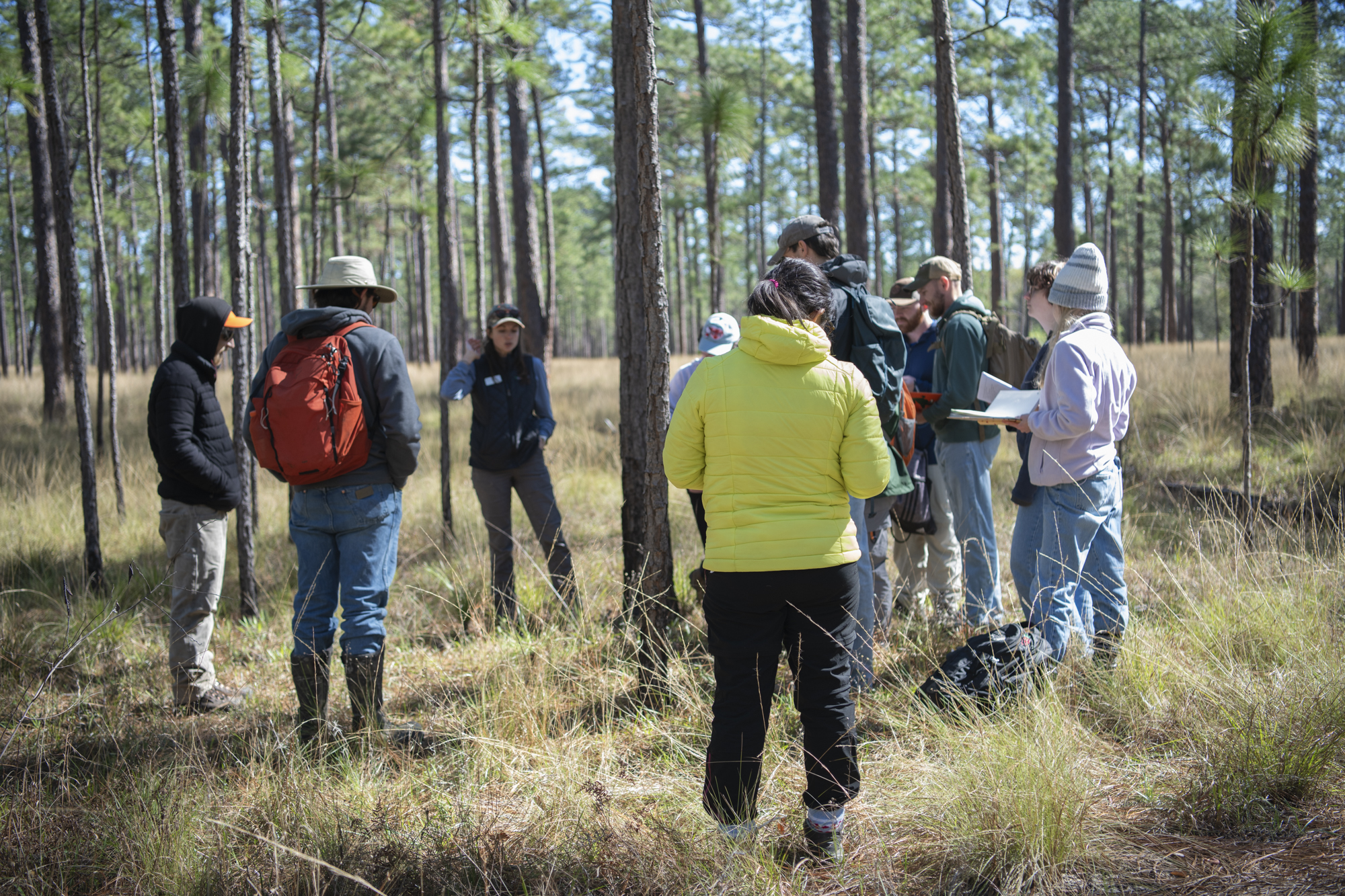
The group, consisting of eight undergraduate students, visited Ichauway in March as part of their Wildlife Habitat Management Short Course. Under the direction of Associate Professor Dr. Marcus Lashley, they explored management practices and research implemented to maintain the health of Ichauway’s longleaf pine ecosystem.
Throughout the visit, students participated in activities that expanded their knowledge of natural resources and cultivated their interest in land management.
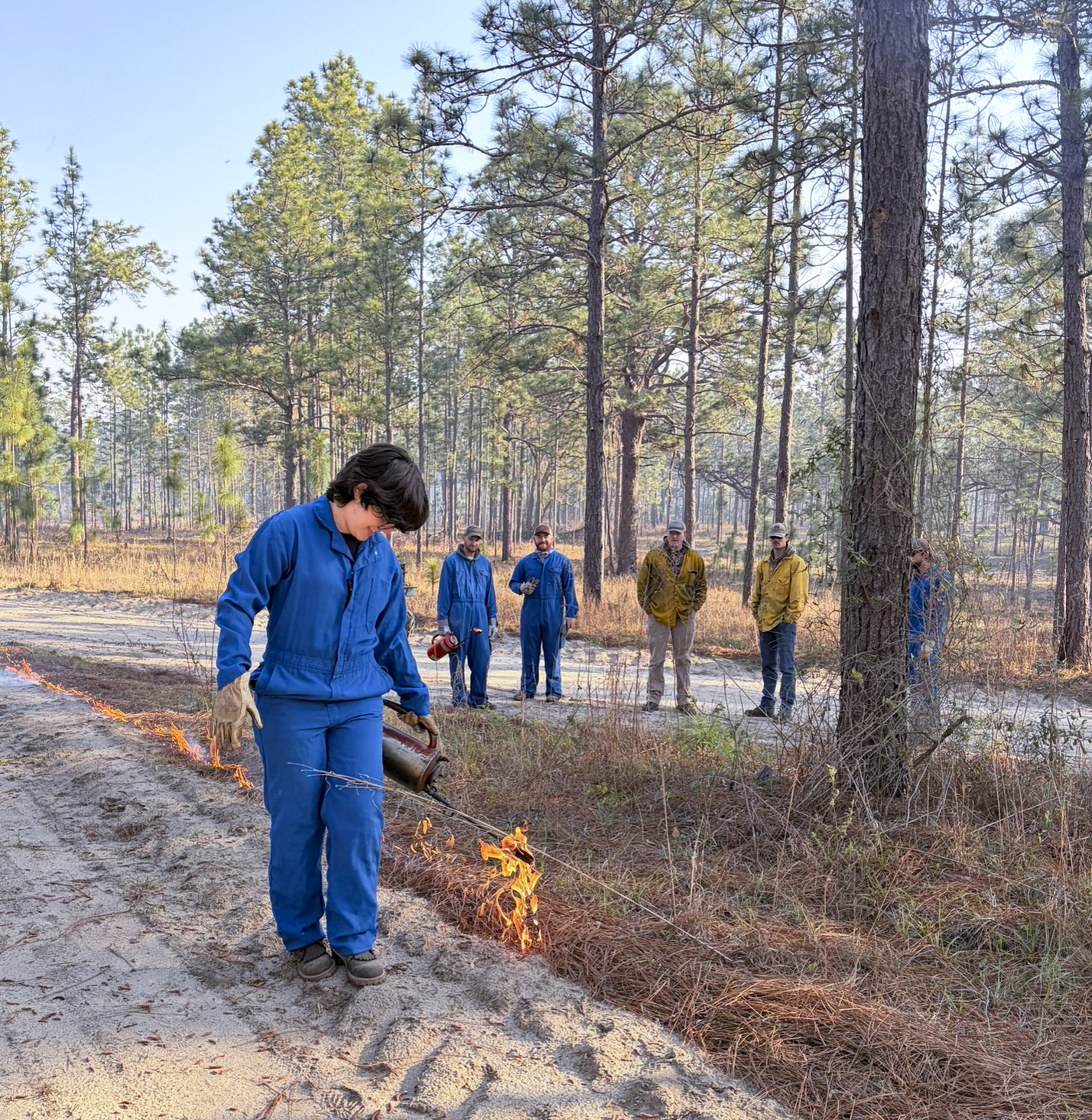
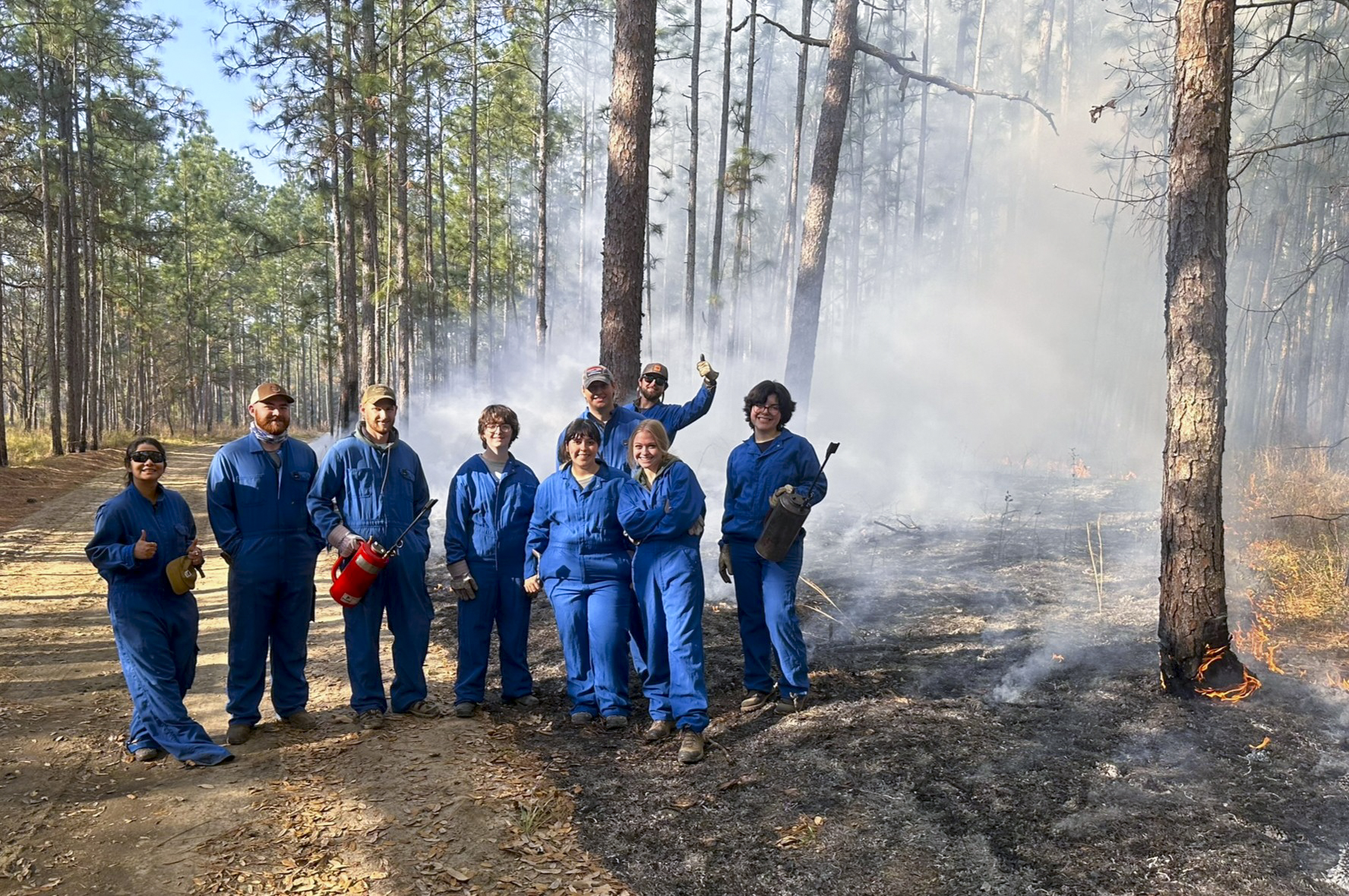
The activities included a variety of field-based lessons such as the design and analysis of a seed predation experiment, a forest stand improvement exercise, and a prescribed burn. The final day concluded with an exam that assessed their wildlife habitat knowledge.
Frequent prescribed fire promotes the growth of a predominantly grassy and herbaceous groundcover and the characteristic open canopy and spare midstory of a healthy longleaf pine savanna. Prescribed fire is the primary land management tool used at Ichauway.
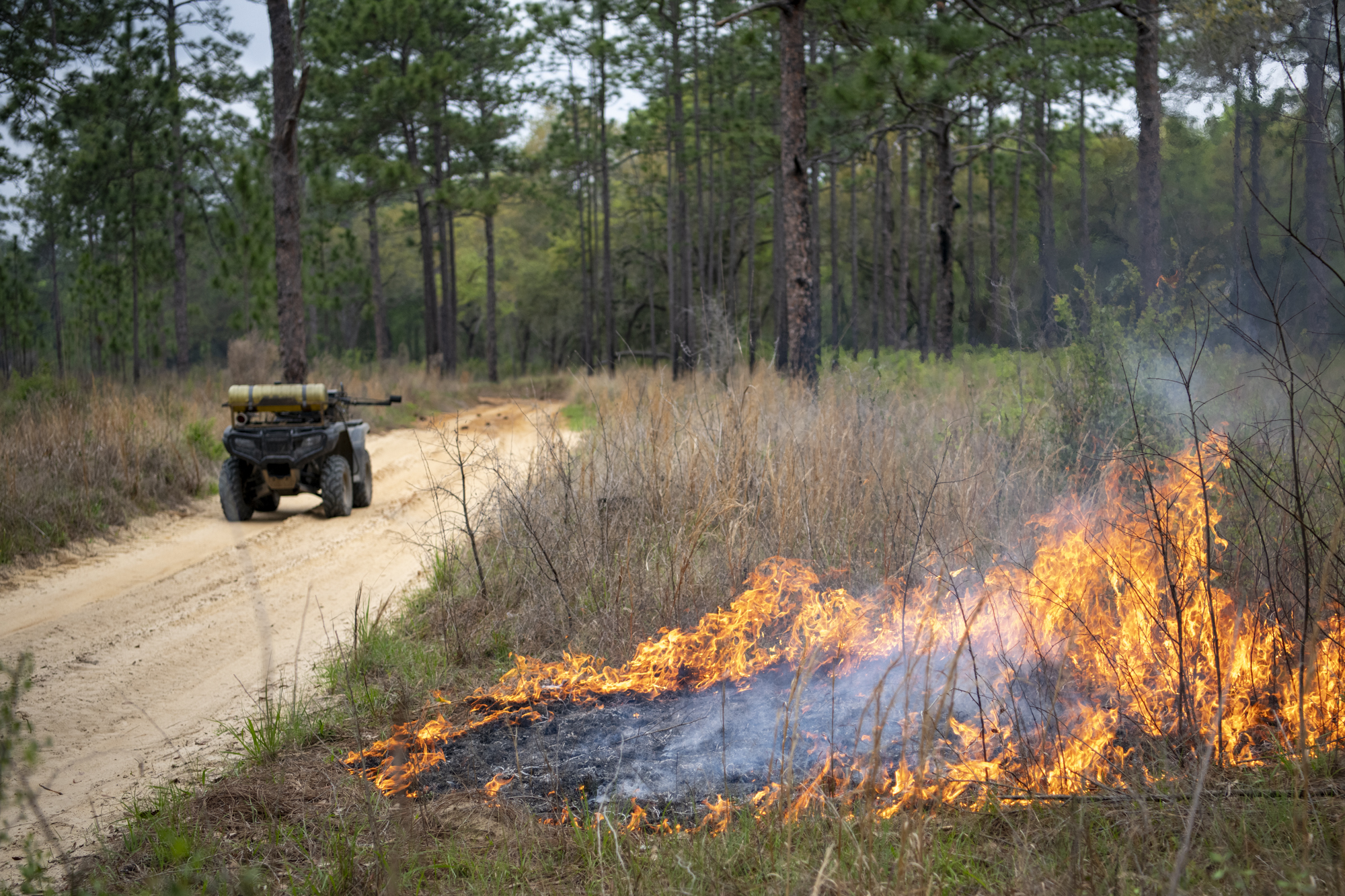
Alexzandria Areias, a student majoring in Wildlife, Ecology, and Conservation, had never witnessed a prescribed burn in person before this course. For her, the burn represented one of the most eye-opening parts of the visit and inspired her to think deeply about continuing her education in natural resources.
“Everything I learned about fire throughout the week stuck with me the most,” Areias said. “In turn, I am now considering furthering my education in fire ecology and habitat restoration.” She is in her final year as an undergraduate student and expected to graduate this spring.
While this experience was particularly transformative for her, field courses like this also provide students with a more technical, behind-the-scenes look into how management decisions are made.
Student Cole Beamon was impressed by how much he could connect the dots between Ichauway’s field experiences and his classes and work back home.
“I’m taking wildlife ecology and management, fire ecology, and then this class—and everything I’m learning here is directly correlated to fire ecology and wetlands, which is very good,” Beamon said. “This experience puts it at a scale that I don’t think people realize is actually happening.”
From its ephemeral wetlands to its frequently burned uplands, Ichauway serves as a small—but monumental blip—in these students’ education. The discoveries uncovered, and the knowledge learned here, set the foundation for their continued learning in the field of natural resources.